
Exercise After Spinal Cord Injury
Click the triangle below to listen to the podcast brief and access the transcript by clicking here.
Overview
- Most everyone with spinal cord injury (SCI) can be physically active and benefit from regular exercise after their injury.
- Your exercise program should include four parts: aerobic exercise, strength training, flexibility exercise, and functional training.
- Setting goals, recognizing potential barriers, being prepared, and learning about resources can help you have a successful exercise program.
- With so many options, you can find an exercise program that is right for you.
Introduction
People with SCI can quickly become out of shape after their injury due to reduced activity. About one in four people with SCI don’t have the level of physical fitness needed to perform basic daily activities. Low levels of fitness can cause other problems like weight gain, heart disease, and diabetes. Regular exercise can reduce the risk of developing these and other health problems.
Importance of Regular Exercise
Some of the benefits of regular exercise include:
- Improves energy levels and ability to take part in activities
- Stronger muscles
- Improved flexibility
- Improved mood
- Improved sleep
- Decreased pain
- Ability to maintain a healthier weight
- Reduced risk of heart disease and diabetes
Because of these benefits, exercise is more than just fun—it’s a form of medicine that can be a powerful tool for preventing and treating many health conditions.
Exercise Guidelines
Researchers have developed exercise guidelines specifically for people with SCI. These exercise guidelines provide the minimum amount of exercise needed to improve fitness and health.
If you are new to exercising, adults with SCI should gradually work up to doing at least:
- Twenty minutes of moderate to vigorous aerobic exercise two times a week
- Three sets of strength-training exercises for each major muscle group (chest, shoulders, back, arms, core, and legs) two times a week
This level of exercise will increase your cardiovascular fitness and your muscular strength.
Once you are comfortable with doing 20 minutes of moderate to vigorous aerobic exercise twice per week, consider working up to the advanced level for additional health and fitness benefits.
- Thirty minutes of moderate to vigorous aerobic exercise three times a week
- Three sets of strength-training exercises for each major muscle group (chest, shoulders, back, arms, core, and legs) two times a week

If you can’t meet these guidelines, then exercise regularly based on your abilities. Avoiding inactivity is very important. Any amount of exercise is better than no exercise. Talk to a physical therapist, clinical exercise physiologist, trainer, or your doctor for more guidance. For more information, consult the Physical Activity Guidelines for Adults with Spinal Cord Injury at https://sciguidelines.ubc.ca/.
Aerobic Exercise
Aerobic exercise is particularly good for heart health. You can use the “talk test” to help gauge the intensity of your workout. If you are doing moderate-intensity exercise, you should be able to talk but not sing. If you are doing vigorous-intensity exercise, you shouldn’t be able to say more than a few words without pausing to take a breath. Aerobic exercise should include three phases:
- Stretch and do light-intensity activity for 5–10 minutes before starting your aerobic workout. These activities increase blood flow and help warm up your muscles.
- Exercise at a moderate or vigorous intensity for at least 20–30 minutes (based on the talk test).
- Cool down for 5–10 minutes by doing a light-intensity activity.
Strength Training
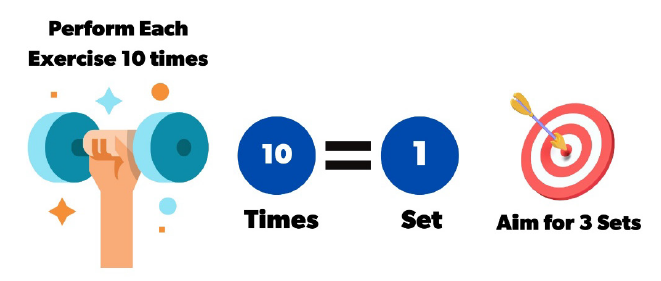
Strength training can be done on the same or a different day as your aerobic exercise. But strength training doesn’t count toward your time for aerobic exercise. Strength training should target the muscle groups that you can control. These muscles will differ for everyone depending on their SCI. To start, plan to perform each exercise 8–10 times (10 repetitions = 1 set) and aim for a total of three sets. Take a short break in between sets. You get the most out of strength training when your last set is difficult to complete.
Flexibility Exercise (Stretching)
Stretching is any deliberate movement or position that keeps your muscles flexible. You should stretch regularly to maintain the range of motion in your joints. In general, you should focus on your shoulders, elbows, hips, knees, and ankles because these are common areas of muscle tightness after SCI. Your doctor, physical therapist, or other trained clinician can help you identify the muscles that are most important to stretch. Stretching can be done by yourself or with help from a trainer, therapist, aide, family member, or friend. You should stretch at least once a day. Start by gently and slowly stretching each targeted muscle for 15–30 seconds. Repeat the stretch a second time and try to stretch a little further if possible. You should also stretch before and after aerobic exercise and strength training.
Functional Training
Functional training is designed to help you improve your ability to safely and effectively perform daily activities. For example, it can help you to maintain your balance while reaching to pick up an object from a table or off the ground. Functional training includes exercises that work on balance, body control, coordination, and agility. You may work with a rehabilitation professional to identify functional exercises that will help you do the things you want to do in everyday life. Functional training can be incorporated into your exercise routine two to three times a week. Because functional training may involve exercises that make you unstable, you should start out doing these exercises with a care provider or exercise professional to ensure you are safe.
Scheduling Exercise
You are more likely to follow through with your exercise plans if you add exercise time to your calendar. When you schedule exercise, it is like making an appointment with yourself. Decide what days and times you plan to exercise and put this information in your calendar. You might also include what exercises you plan to do and where you will do them. The more detailed the plan, the less you have to think about when it is time to exercise.
Listen to your body. Some people like to rest and recuperate for 1 or 2 days between workouts. If you are doing strength training using the same muscles, you should wait at least 48 hours in between workouts to give your muscles time to recover.
Options for Exercising
One of the great things about exercise is that so many options exist. Exercise can be done in your home on your own, or with others by following an online exercise class or video. You can also exercise at a gym, in the community, or outdoors. You can exercise alone or with others.
Activities that are part of your daily routine, such as walking or using your wheelchair, can be considered exercise as long as you achieve the recommended duration and intensity.
Depending on your injury and preference, you may work out at an adaptive fitness center or with the help of a care partner.
Examples of aerobic exercises include:
- Hand cycling.
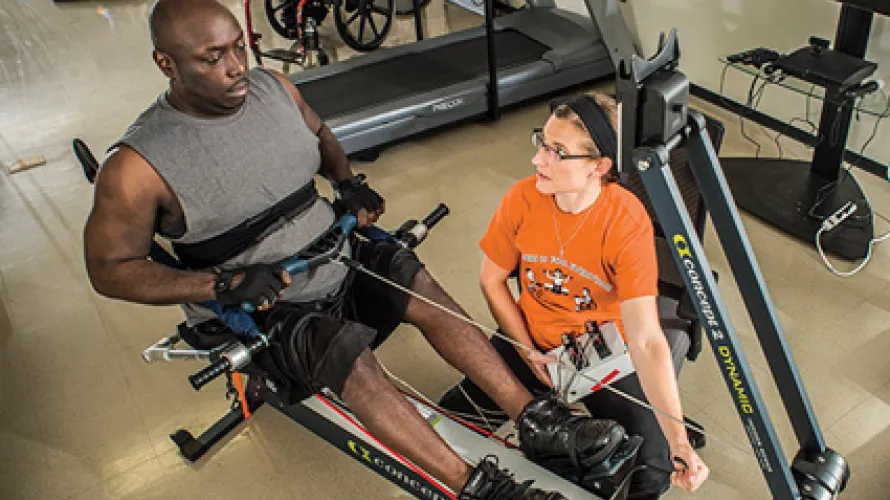
- Rowing.
- Circuit training.
- Swimming.
- Playing wheelchair basketball.
- Pushing your wheelchair briskly (if you use a wheelchair).
- Walking (if able).
- For people with limited ability to voluntarily activate their muscles or people who have very weak muscles, functional electrical stimulation (FES) can help contract the muscles so that you can get more out of exercising. For more information, see https://msktc.org/sci/factsheets/functional-electrical-stimulation-fes-sci.
Examples of strength training include:
- Lifting weights.
- Using elastic resistance bands.
- Doing bodyweight exercises. These exercises use your body’s own weight as resistance, like push-ups.
- FES-supported strength training.
Examples of flexibility exercises include:
- Laying on your back and straightening your arms out to the sides to stretch your chest muscles.
- Laying on your stomach to stretch your hip muscles.
- Using special equipment, like a standing frame, that can help you stand while you stretch your ankle muscles.
- Caregiver-assisted stretching.
Examples of functional training include:
- Sitting or standing while reaching in different directions.
- Unsupported sitting. You can incorporate multidirectional trunk movements for a greater challenge.
- Standing while balancing with one foot in front of the other.
- FES-assisted balance exercises.
You might need special equipment to exercise, depending on your needs and how and where you choose to exercise. For example, you may need:
- Straps to improve positioning, stability, and balance while exercising
- Cuffs or wraps to help grip the exercise equipment
- Body weight support
- FES
Where to Start
Talk to your physician before starting any exercise program.
Think about your goals for exercise. Goals will be different for everyone. Here are some examples:
- Become physically fit and improve your heart health
- Maintain a healthy weight
- Be active and enjoy the outdoors
- Make friends at a gym or exercise class
- Improve energy levels
- Make doing daily activities easier
Set realistic goals and write them down. Keep your goals visible and refer to them often. Use these goals to stay motivated and remind yourself why you started exercising.
Think about the best location to exercise and keep an exercise routine. Consider your mobility level, transportation options, whether you prefer to exercise alone or in a group, cost (e.g., gym memberships, equipment), and the accessibility of local fitness centers. There is no right or wrong place. Focus on a setting that will give you the best chance for success. For example, if you know that you’ll need support and encouragement from others, then a home-based exercise program is probably not the right choice.
Ask yourself the following questions:
- Do I want to exercise indoors or outside?
- Do I want to exercise alone or as part of a class, or follow along with an online class?
- Do I want to exercise at home or at a fitness center, and if at a fitness center, is it accessible?
- Are there exercise classes available at my fitness center or in the community? Are they accessible?
- How will I get to the fitness center or classes?
- What fitness plan or equipment can I afford?
- Do I have an interest in a specific sport? What adaptive sports programs are in my area? For more information about adaptive sports, consult Adaptive Sports and Recreation at https://msktc.org/sci/factsheets/adaptive-sports-and-recreation.
Talking to other people with SCI may help you get ideas about exercising. Keep in mind that how you get your exercise may change over time. For example, you may start at home and then later decide to join a gym, or you may start at a gym and find that it’s easier for you to work out at home or in your community.
Ready, Set, What’s Next?
Go easy as you start to exercise. If you’re not used to exercising, give your body time to adapt to being active. If you have not exercised recently, you should get comfortable doing moderate-intensity activities before adding more vigorous ones.
Healthy Eating
Proper nutrition allows you to get the most benefits from your exercise program. Like exercise, good nutrition can help to manage blood pressure and cholesterol and decrease your risk of diabetes and heart disease. Eating right also promotes a strong immune system and helps prevent skin breakdown.
Here are a few ways to get the energy you need to exercise:
- Eat breakfast.
- Eat small portion sizes.
- Eat five servings of fruits and vegetables a day.
- Eat lean protein, such as chicken and fish, instead of red meat.
- Limit eating processed foods and foods high in saturated fat.
- Choose healthy snacks between meals.
- Stay hydrated.
For more information about nutrition, consult Nutrition and Spinal Cord Injury at https://msktc.org/sci/factsheets/nutrition-and-spinal-cord-injury.
Troubleshooting
Overcome Barriers to Getting Involved
Even if you really want to exercise, some barriers may make starting more difficult than you might think. For example:
- Finding and scheduling reliable transportation
- Fear of stigma and negative attitudes
- Financial barriers
- Health-related concerns, such as skin breakdown, shoulder pain, autonomic dysreflexia, or changes to your bowel and bladder management
These problems are very common. But know that you aren’t alone. Talk to your physical or occupational therapist, doctor, trainer, or friends to help find the best solution. Consider what barriers might come your way and develop a plan to work around them.
Stay Committed
Here are some tips to stay on track with your exercise program:
- Remember your goals.
- Plan out your activities weekly. Have reasonable expectations.
- Exercise at the same time of day so it becomes part of your regular routine.
- Track your progress by recording your exercises and the days you exercised in a calendar, journal, app, or wearable device. Reflect on where you started to see how far you’ve progressed.
- Be flexible. If something comes up and you can’t exercise as planned, work structured physical activity into your day in other ways.
- Consider listening to music or audiobooks while you are exercising.
- Find an exercise buddy or get support from your friends and family to stay motivated.
Exercise Considerations
Exercise should be enjoyable and safe but be on the lookout for problems that might arise when participating in exercise. Below are some common problems that may come up when you exercise and tips for how you can prevent or manage them.
| Considerations | What to know | What to do |
|---|---|---|
| Autonomic dysreflexia (AD) | People with injuries at or above spinal level T6 are at risk of AD. AD involves the quick onset of very high blood pressure and can be deadly if not treated. Common symptoms include headache, sweating, nausea, goosebumps, and a stuffy nose. (For more information, consult Autonomic Dysreflexia at https://msktc.org/sci/factsheets/ autonomic-dysreflexia.) | If you have symptoms of AD while exercising, stop right away and try to determine and reverse the cause. Sit up, loosen any tight clothing, check your bladder (Ask yourself the following: Is your leg bag full? Is your catheter draining? Do you need to catheterize?), and try to relieve pressure on any areas of the body that may be in pain by shifting your position. Seek medical help quickly if your symptoms don’t go away. |
| Skin care | Exercise may increase pressure or friction on the skin. This increased pressure can increase the risk of skin breakdown. (See Skincare and Pressure Sores in Spinal Cord Injury at https://msktc.org/sci/factsheets/skincare-and-pressure-sores-spinal-cord-injury.) | Check your skin before, during, and after your exercise sessions. Tell your doctor if you have an area of skin that gets red after exercising and doesn’t go away. |
| Body temperature regulation | Some people with SCI may not be able to regulate their body temperature when exercising. | Drink fluids before, during, and after exercise. In the heat, use a cold towel or spray bottle to help you stay cool. In the cold, wear layers of clothing and add or remove layers as needed to keep warm but not overheat. |
| Low blood pressure | Some people with SCI may experience lightheadedness, dizziness, and/or nausea when moving from lying down to sitting or from sitting to standing. | Avoid quick movements from lying down to sitting or from sitting to standing. When participating in exercises involving changes in body position, try using compression stockings and/or an abdominal binder. |
| Overuse injury | Overuse injuries can occur when you perform the same movements using the same muscles for everyday activities and exercise. | Your exercise plan should include a combination of aerobic, strength, flexibility, and functional training. Emphasize movements that are different from those you perform every day (e.g., if you push a manual wheelchair, include exercises involving pulling motions, like rowing). |
| Fracture risk | People with SCI who don’t stand or walk regularly may develop weaker bones below their level of injury, which can increase their risk of bone fracture. For more information on bone loss, consult Bone Loss After Spinal Cord Injury at https://msktc.org/sci/factsheets/bone-loss-after-spinal-cord-injury. | Talk to your doctor about your risk for bone loss and fractures before starting a new exercise program. Seek medical attention if you notice any abnormal pain, swelling, or redness after exercise or develop a low-grade fever. |
Additional Resources
The CDC’s Physical Activity Guidelines (https://www.cdc.gov/physical-activity-basics/guidelines/adults.html) include definitions related to exercise.
The National Center on Health, Physical Activity and Disability (https://www.nchpad.org/) offers information about exercise, nutrition, weight loss, and advocacy initiatives for people with disabilities.
Authorship
Exercise After Spinal Cord Injury was originally developed in 2016 by Cheri Blauwet, MD, and Jayne Donovan, MD, in collaboration with the National Center on Health, Physical Activity and Disability (NCHPAD) and the Model Systems Knowledge Translation Center (MSKTC). This factsheet was updated in 2025 by Martin Ginis KA, PhD; Kristin Musselman, PT, PhD; Nicholas Evans, PhD; Kimberley R. Monden, PhD; Ashraf Gorgey, MPT, PhD; Leslie Morse, DO; Allen Heinemann, PhD; Alex W.K. Wong, PhD, DPhil; and Sharon Parmet, MS, in collaboration with the MSKTC.
Source: The content in this factsheet is based on research and/or professional consensus. This content has been reviewed and approved by experts from the Spinal Cord Injury Model Systems (SCIMS) centers, funded by the National Institute on Disability, Independent Living, and Rehabilitation Research (NIDILRR). The content of the factsheet has also been reviewed by individuals with SCI and/or their family members.
Disclaimer: This information is not meant to replace the advice of a medical professional. You should consult your health care provider about specific medical concerns or treatment. The contents of this factsheet were originally developed under a grant from the National Institute on Disability, Independent Living, and Rehabilitation Research (NIDILRR grant number 90DP0082) and were updated under a NIDILRR grant (90DPKT0009). NIDILRR is a Center within the Administration for Community Living (ACL), Department of Health and Human Services (HHS). The contents of this factsheet do not necessarily represent the policy of NIDILRR, ACL, or HHS, and you should not assume endorsement by the federal government.
Recommended citation: Martin Ginis, K. A., Musselman, K., Evans, N., Monden, K. R., Gorgey, A., Morse, L., Heinemann, A., Wong, A. W. K., & Parmet, S. (2025). Exercise after spinal cord injury. Model Systems Knowledge Translation Center (MSKTC).https://msktc.org/sci/factsheets/exercise-after-spinal-cord-injury
Copyright © 2025 Model Systems Knowledge Translation Center (MSKTC). May be reproduced and distributed freely with appropriate attribution. Prior permission must be obtained for inclusion in fee-based materials.