This infocomic provides information on concussions, including what a concussion is, symptoms, and what to expect during the recovery process.


Header

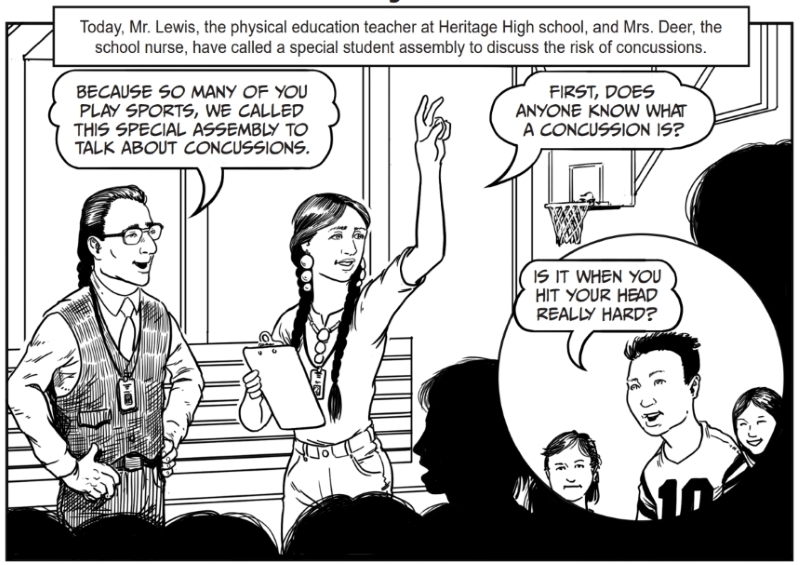
Concussion RecoveryMr. Lewis, the physical education teacher at Heritage High school, and Mrs. Deer, the school nurse, have called a special student assembly to discuss the risk of concussions.

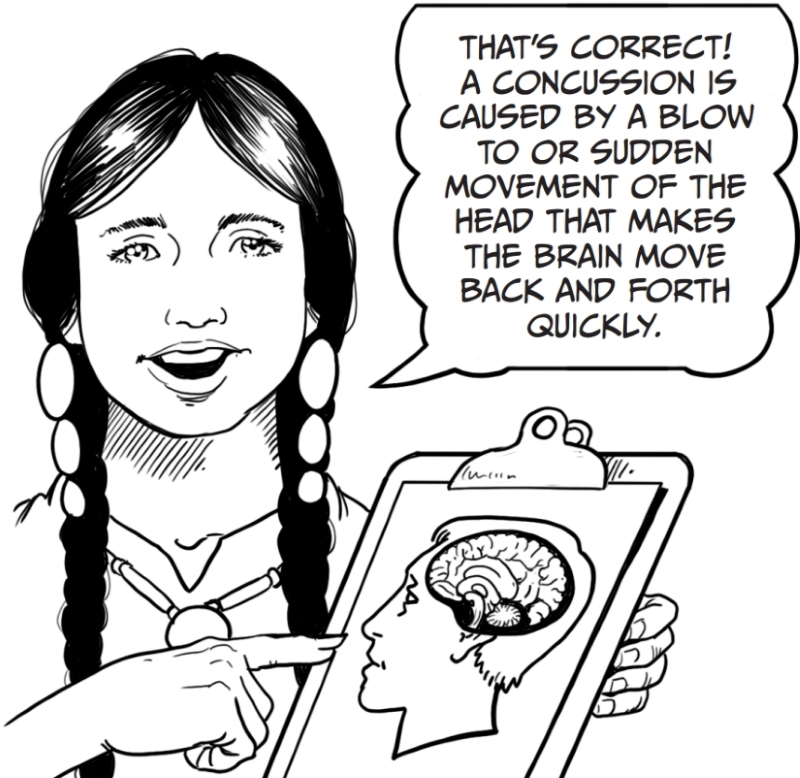
that’s correct! a concussion is caused by a blow to or sudden movement of the head that causes the braIn to move back and forth quIckly.

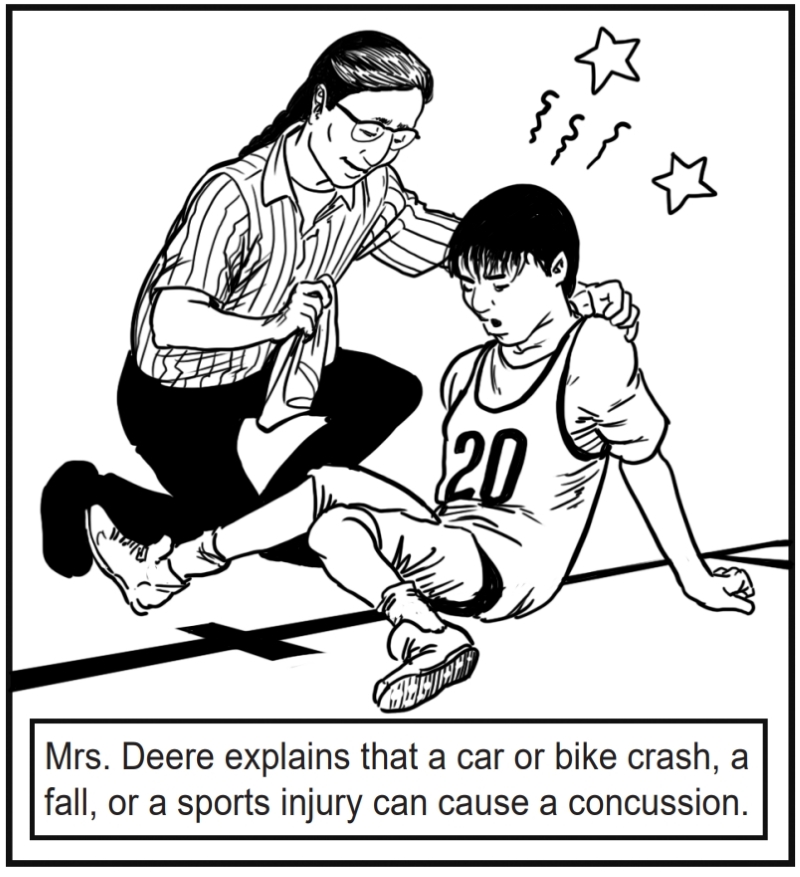
Mrs. Deere explains that a car or bike crash, a fall, or a sports injury can cause a concussion.

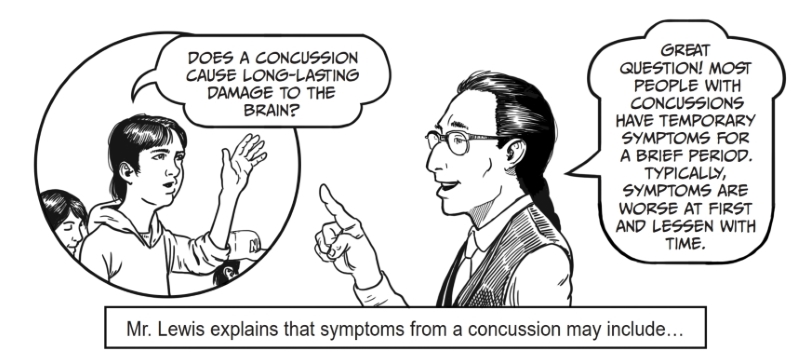
does a concussion cause long-lasting damage to the brain?

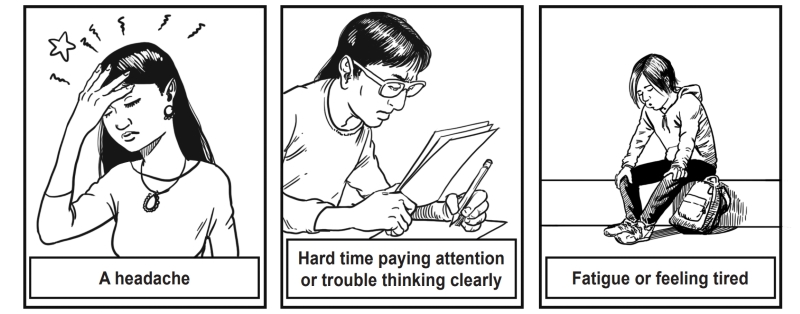
A headache, Poor concentration or trouble thinking clearly, Fatigue or feeling tired

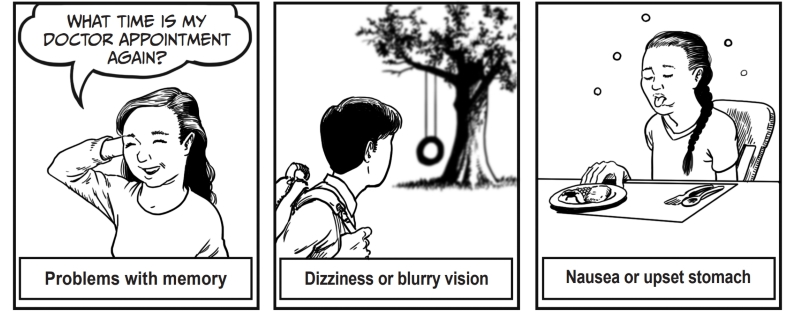
Problems with memory, Dizziness or blurry vision Fatigue, or feeling tired Nausea or upset stomach

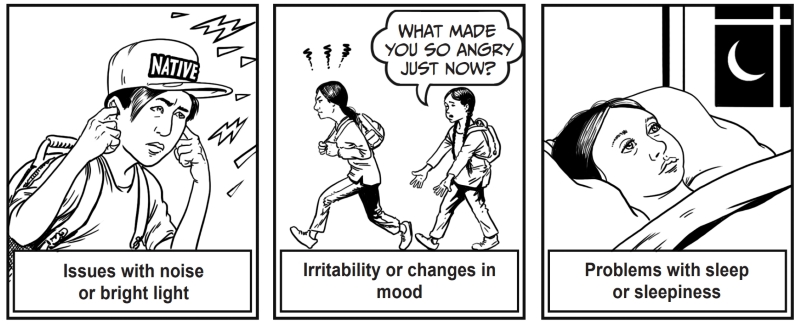
Issues with noise or bright light, Irritability or changes in mood, Problems with sleep or sleepiness

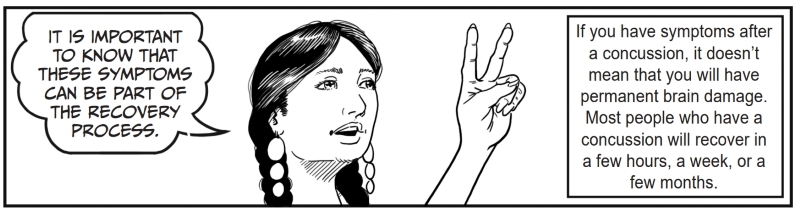
If you have symptoms after a concussion, it doesn’t mean that you will have complications or permanent brain damage. Most people who have a concussion will recover in a few hours, a week, or a few months.

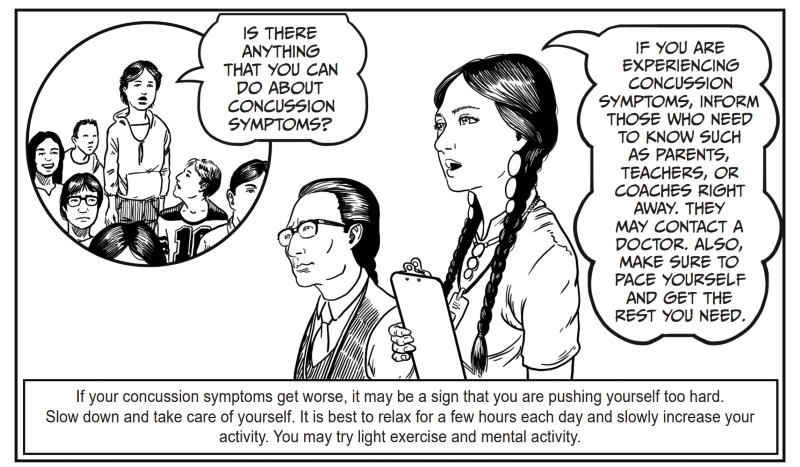
If your concussion symptoms get worse, it may be a sign that you are pushing yourself too hard. Slow down and take care of yourself. It is best to relax for a few hours each day and slowly increase your activity. You may try light exercise and mental activity.

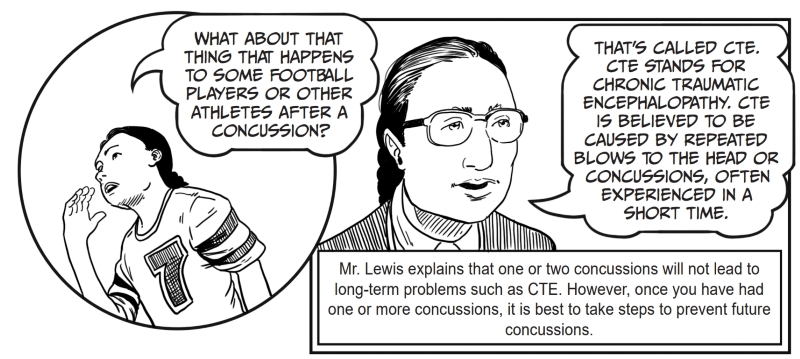
What about that thing that happens to some football players or other athletes after a concussion? Mr. Lewis explains that one or two concussions will not lead to long-term problems such as CTE. However, once you have had one or more concussions, it is best to take steps to prevent future concussions.

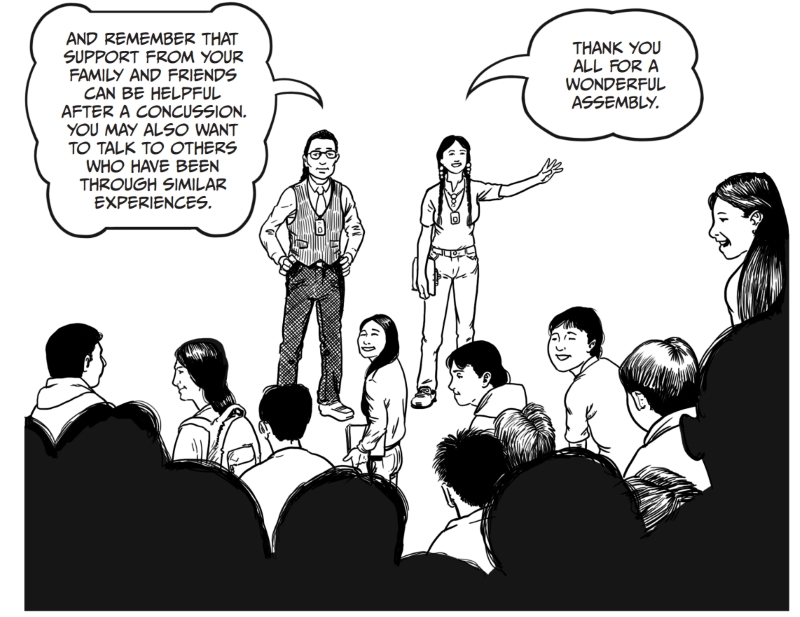
and rememBer that support from your family and friends can be helpful after a concussion. you may also want to talk to others who have been through similar experiences.

Source, Disclaimer, Additional Note, and Copyright

Footer