
Anxiety and Spinal Cord Injury
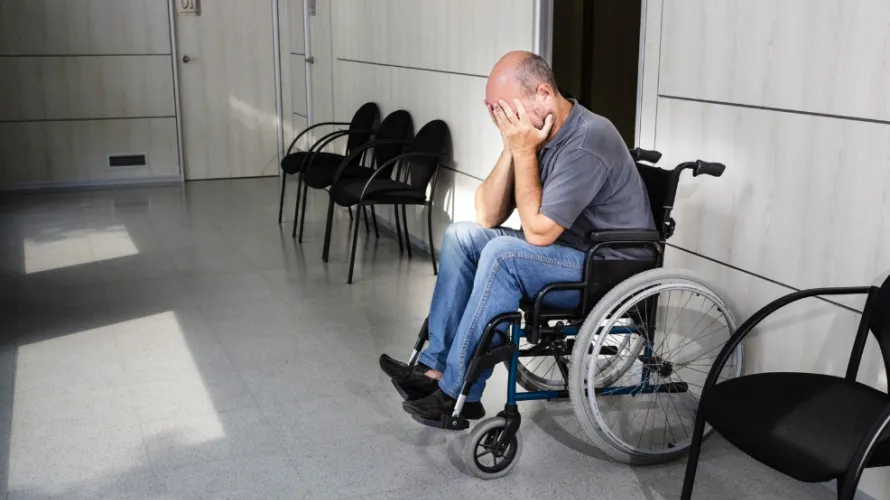
What Is Anxiety?
Anxiety is a normal response when faced with stressful situations or life changes. It is a feeling of worry or fear that an event, threat, or situation will come true. Anxiety can sometimes be useful by pushing us to change our behavior or environment, work through problems, or look at things from a new perspective. However, anxiety can also be unhelpful and interfere with our daily lives. People often describe anxiety as a feeling of fear, dread, or unease. People may also feel anxiety in their bodies, such as muscle tension. These feelings are different for different people but can include shortness of breath, a fast heart rate, chest pain, sweating, goosebumps, headaches, fatigue, and trouble sleeping. Anxiety often goes away once the stressful situation is over or there has been time to adjust to any new circumstances.
What Is Generalized Anxiety Disorder?
Generalized anxiety disorder (GAD) is excessive, ongoing anxiety and worry. These feelings last for at least 6 months and are hard to control. This is anxiety that is unhelpful; out of balance with the situation, threat, or actual risk; and interferes with daily activities.
To be diagnosed with GAD, you must have at least three of the following symptoms for more than 6 months:
- Feeling on edge or restless
- Tiring easily or feeling more tired than usual
- Having a hard time concentrating or focusing
- Feeling irritable
- Having muscle aches or soreness
- Having a hard time falling or staying asleep and/or waking up early
You can only be diagnosed with GAD if your symptoms aren’t better explained by other medical conditions, mental health disorders, or substance use disorder. Sometimes people with GAD can have panic attacks. Panic attacks are sudden, intense feelings of fear or terror without the presence of any danger. They last only a few minutes and can be accompanied by shortness of breath, quickened heartrate, and sweating. These attacks may or may not be present with GAD.
What Causes Generalized Anxiety Disorder?
Researchers believe that several factors can increase a person’s chances of having GAD. You can inherit GAD through the genes you got from your parents. Traumatic or ongoing stressful experiences can also cause GAD. Examples include violence or abuse. Family-related stressors such as divorce, illness, or death can also cause GAD. Accidents or events that cause severe injury, such as an SCI, can also cause anxiety or GAD.
How Is Anxiety Related to SCI?
Having an SCI, whether caused by a traumatic event or a health condition, may trigger or worsen anxiety, at least for a while. The event responsible for the SCI, fear of the onset of conditions related to the SCI (e.g., pressure injuries), or constant worry about well-being and the future can cause anxiety.
Research has found that 30% to 45% of people with SCI will have significant anxiety, but not everyone living with an SCI experiences GAD.
Anxiety can occur at any time after SCI. It may appear right after the injury, during rehabilitation, when transitioning home, or even later. Each stage can bring new challenges and adjustments, and it’s common for anxiety to increase at transition points.
Common times when anxiety may occur include:
- While in the hospital, especially as you adjust to your SCI
- When feeling uncertain about the future and worrying about what you will or will not be able to do
- When feeling concerned about the impact your SCI will have on your family, work, and other relationships
- During inpatient rehabilitation as you learn new ways to do things
- When returning home and adjusting to life outside the hospital and adapting to new routines and responsibilities
For more information on adjusting to SCI, consult Adjusting to Life after Spinal Cord Injury at https://msktc.org/sci/factsheets/adjusting-life-after-spinal-cord-injury
When Is Anxiety After SCI a Problem?
You may have GAD if anxiety lasts longer than 6 months and interferes with you doing the things you want to do.
Generalized Anxiety Disorder Quick Screen
The Generalized Anxiety Disorder-2 screens for GAD. Choose the number of days you have experienced the two problems listed below in the last 2 weeks. Add up the points for the two rows. If you score higher than 3 points, you should talk to your primary care provider about being evaluated further for GAD.
| Over the last 2 weeks, how often have you been bothered by the following problems? | Not at all | Several days | More than half of the days | Nearly every day |
| Feeling nervous, anxious, or on edge | 0 points | 1 point | 2 points | 3 points |
| Not being able to stop or control worrying |
0 points | 1 point | 2 points | 3 points |
What Kind of Health Care Provider Should I See for Anxiety?
Several kinds of mental health providers can diagnose and treat GAD. Start with your primary care provider. They may refer you to a psychiatrist, a psychologist, or a licensed clinical social worker or counselor. A psychiatrist is a doctor trained to diagnose mental health problems and prescribe medicine. A psychologist can also diagnose mental health problems and provide various types of counseling. A licensed clinical social worker or licensed professional counselor can also provide counseling and refer you to someone to prescribe medicine for managing anxiety if you need it.
What Kind of Therapy Can Help to Treat Anxiety?
Cognitive behavioral therapy (CBT) and eye movement desensitization and reprocessing (EMDR) are two therapies that can help with anxiety. You can have CBT with your therapist alone or together with other people in a group. Research shows that both are effective in treating anxiety in people with SCI. A therapist may also suggest EMDR, a therapy designed to lessen distress due to traumatic memories.
What Can I Do to Reduce Anxiety?
Different methods may work better for different people. Here are some things you can try on your own or with the help of a health care professional to reduce anxiety:
- Breathing and relaxation exercises
- Exercise (for more information on exercising with an SCI, consult Exercise After Spinal Cord Injury at https://msktc.org/sci/factsheets/exercise-after-spinal-cord-injury)
- Getting enough sleep
- Joining a support group
- Limiting caffeine intake, including coffee, tea, and sodas
Other options include:
- Acupuncture
- Aromatherapy
- Tai chi, yoga, or other gentle movement practices
- Meditation
- Apps that help you reduce your anxiety
Some people with SCI find that cannabis can relieve anxiety; others find that it heightens anxiety. Research into the risks and benefits, dosing, and potential consequences of using cannabis for anxiety is ongoing. Talk to your doctor if you use or are thinking about using cannabis.
What About Medicine?
Several medicines can help reduce anxiety. A psychiatrist or primary care doctor can discuss and prescribe medicines that may work for you.
Before starting any anxiety medication, you must tell your doctor about all medicines you currently take for SCI or other medical conditions to avoid negative interactions. Also, let them know about any other methods you’re using to manage your anxiety.
Some antidepressants, like selective serotonin reuptake inhibitors (SSRIs) and serotonin and norepinephrine reuptake inhibitors (SNRIs), may help to reduce anxiety. These medications have more long-lasting effects on anxiety over the course of the day. A commonly prescribed SSRI is fluoxetine, also known as Prozac®. A commonly prescribed SNRI is venlafaxine, or Effexor®. Other types of medications called anxiolytics may also help. These are short-acting medications that are usually taken at the onset of heightened anxiety. Anxiolytics are usually from a class of medications called benzodiazepines, with Valium®, Xanex®, and Ativan® as examples.
It can take time to find the right medicine or combination of medicines that works best for you.
Some medicines that help to reduce anxiety have the potential for addiction, including benzodiazepines. People with substance use disorder should be especially careful when it comes to these medicines. Always talk to your doctor before you start a new medicine.
Combining medication with therapy is known to work better than using one of these treatments alone. This is because therapy and medication usually target different symptoms—therapy can help with negative thinking and behaviors, while medicine can help with the physical symptoms of anxiety.
No matter which treatment you choose, finding the right therapist, medication, or combination can take time. Always follow your doctor’s instructions.
Support Groups
Joining a support group where you can talk with others about your experiences with SCI and anxiety can help you feel less alone. You may also learn about what others have done that has helped them with anxiety. Connecting with a peer mentor—someone with an SCI—can also be helpful. Below are some resources you can use to find a support group or peer mentor:
- United Spinal Association (https://unitedspinal.org/) has a network of support groups across the United States.
- The Christopher and Dana Reeve Foundation (https://www.christopherreeve.org/) offers online support groups and can connect you with a peer mentor.
- https://Facingdisability.com has a Facebook page where you can connect with others with SCI through a private membership group
Authorship
Anxiety and Spinal Cord Injury was developed by Allen Heinemann, PhD; Kimberley R. Monden, PhD; Jennifer Coker, PhD; Leslie Morse, DO; Heather Taylor, PhD; Jenny Burns; and Sharon Parmet, MS, in collaboration with the Model Systems Knowledge Translation Center (MSKTC).
Source: The content in this factsheet is based on research and/or professional consensus. This content has been reviewed and approved by experts from the Spinal Cord Injury Model System (SCIMS) centers, funded by a grant from the National Institute on Disability, Independent Living, and Rehabilitation Research (NIDILRR grant number 90DPKT0009) and by the Craig H. Neilsen Foundation (project 724833). NIDILRR is a Center within the Administration for Community Living (ACL), Department of Health and Human Services (HHS). The content of the factsheet has also been reviewed by individuals with SCI and/or their family members.
Disclaimer: This information is not meant to replace the advice of a medical professional. You should consult your health care provider about specific medical concerns or treatment. The contents of this factsheet do not necessarily represent the policy of NIDILRR, ACL, or HHS, and you should not assume endorsement by the federal government.
Recommended citation: Heinemann, A., Monden, K. R., Coker, J., Morse, L., Taylor, H., Burns, J., & Parmet, S. (2026). Anxiety and spinal cord injury. Model Systems Knowledge Translation Center (MSKTC). https://msktc.org/sci/factsheets/anxiety-and-sci
Copyright © 2026 Model Systems Knowledge Translation Center (MSKTC). May be reproduced and distributed freely with appropriate attribution. Prior permission must be obtained for inclusion in fee-based materials