Home

Main navigation

  • Spinal Cord Injury
    • Living with SCI
    • Get Involved in Research
    • SCI Ambassador Program
    • Factsheets
    • Slideshows
    • Infocomics
    • Infographics
    • Videos
    • Hot Topics
    • Online Courses
    • Quick Reviews
    • Podcast
    • Resources in Spanish
    • Research Database
    • SCI Model Systems
    • External Resources
    • For Model System Grantees
    • Share and Promote
  • Traumatic Brain Injury
    • Living with TBI
    • Get Involved in Research
    • TBI Ambassador Program
    • Factsheets
    • Slideshows
    • Infocomics
    • Infographics
    • Videos
    • Hot Topics
    • Quick Reviews
    • Podcast
    • Resources in Spanish
    • TBI Bundles
    • Research Database
    • TBI Model Systems
    • External Resources
    • For Model System Grantees
    • Share and Promote
  • Burn Injury
    • Living with Burn Injury
    • Get Involved in Research
    • Burn Ambassador Program
    • Factsheets
    • Slideshows
    • Infocomics
    • Infographics
    • Videos
    • Hot Topics
    • Quick Reviews
    • Podcasts
    • Resources in Spanish
    • Foreign Languages
    • Research Database
    • Burn Model Systems
    • External Resources
    • For Model System Grantees
    • Share and Promote
  • Recursos en Español
    • LME Recursos en Español (SCI Resources in Spanish)
    • TBI Recursos en Español (TBI Resources in Spanish)
    • Quemaduras Recursos en Español (Burn Resources in Spanish)
  • About
    • About MSKTC
    • Share and Promote
    • What People are Saying about MSKTC
    • MSKTC Awards
    • Connect with us
  • Model Systems
    • SCI Model System
    • TBI Model System
    • Burn Model System
    • Technical Assistance for Model Systems Grantees
    • Technical Assistance Resources for Model System Grantees
  • Knowledge Translation
  • Search this website Search

Main 2nd Menu

  • Menu
    • Knowledge Translation
    • Model Systems
      • About Model Systems
      • SCI Model System
      • TBI Model System
      • Burn Model System
      • Technical Assistance for Model Systems Grantees
      • Technical Assistance Resources for Model System Grantees
    • About
      • About MSKTC
      • Connect with us
      • Share and Promote
      • What People are Saying about MSKTC
      • MSKTC Awards

Model Systems Knowledge Translation 
Center

Give
Feedback
  1. Home
  2. Living With Traumatic Brain Injury (TBI)
  3. Living With Traumatic Brain Injury - Infocomics
Traumatic Brain Injury Icon
Traumatic Brain Injury

Stay Healthy After Traumatic Brain Injury

Infocomics
English (PDF)

This infocomic provides information on how to stay healthy after TBI.

Stay Healthy After Traumatic Brain Injury

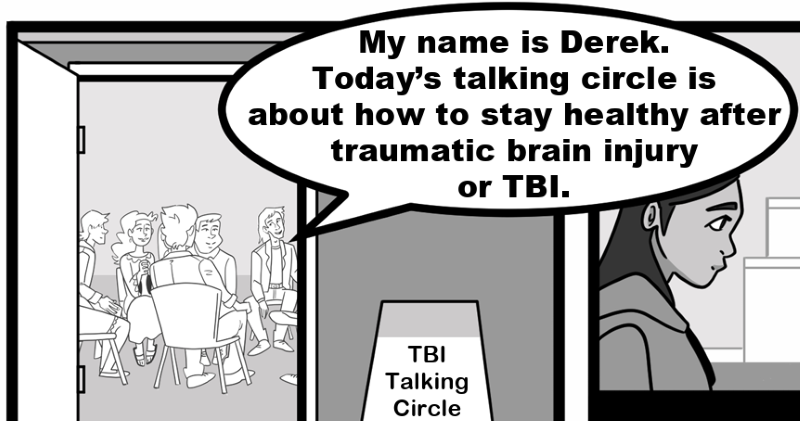
My name is Derek. Today’s talking circle is about how to stay healthy after traumatic brain injury or TBI.

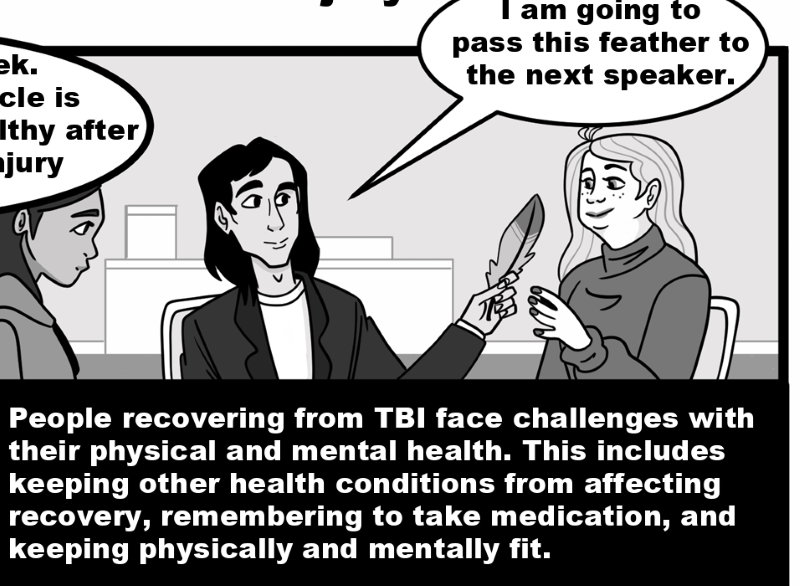
People recovering from TBI face challenges with their physical and mental health. This includes keeping other health conditions from affecting recovery, remembering to take medication, and keeping physically and mentally fit.

How to Monitor Your Health and Care for Other Conditions After TBI

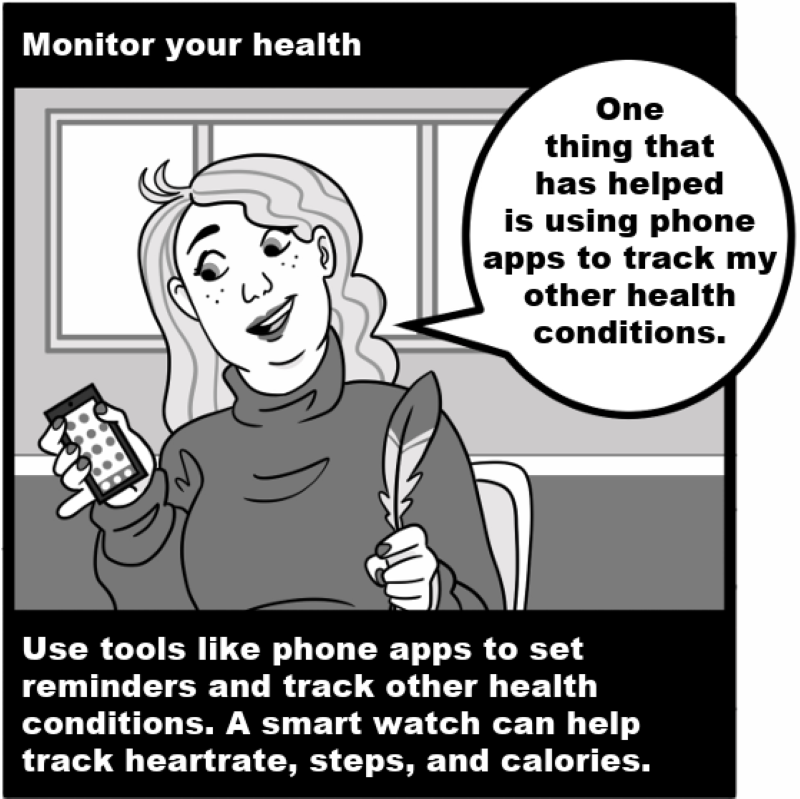
Monitor your health - Use tools like phone apps to set reminders and track other health conditions. A smart watch can help track heartrate, steps, and calories.

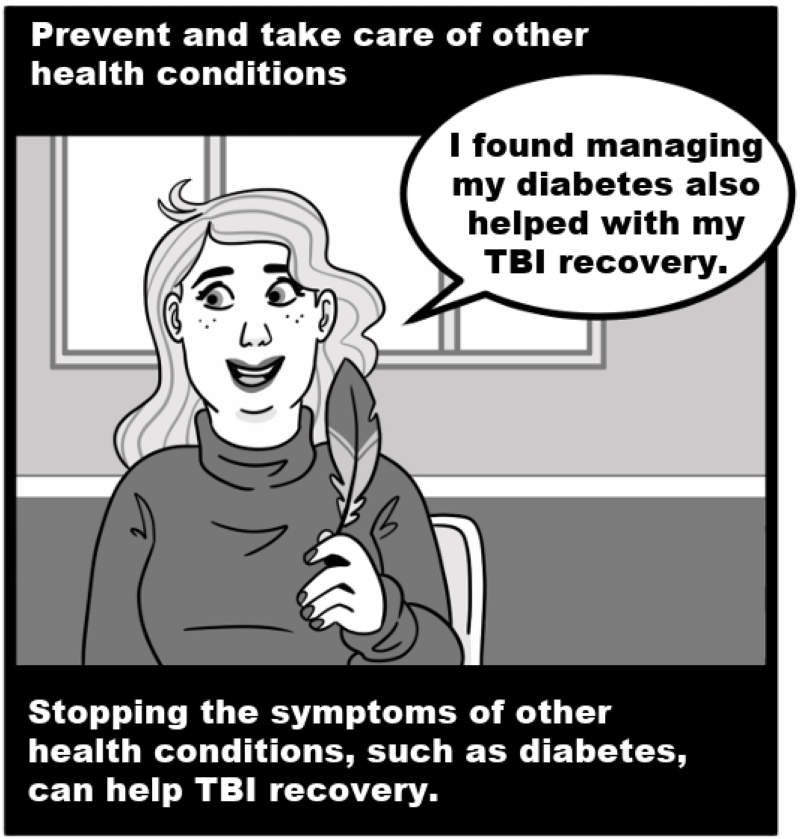
Prevent and take care of other health conditions

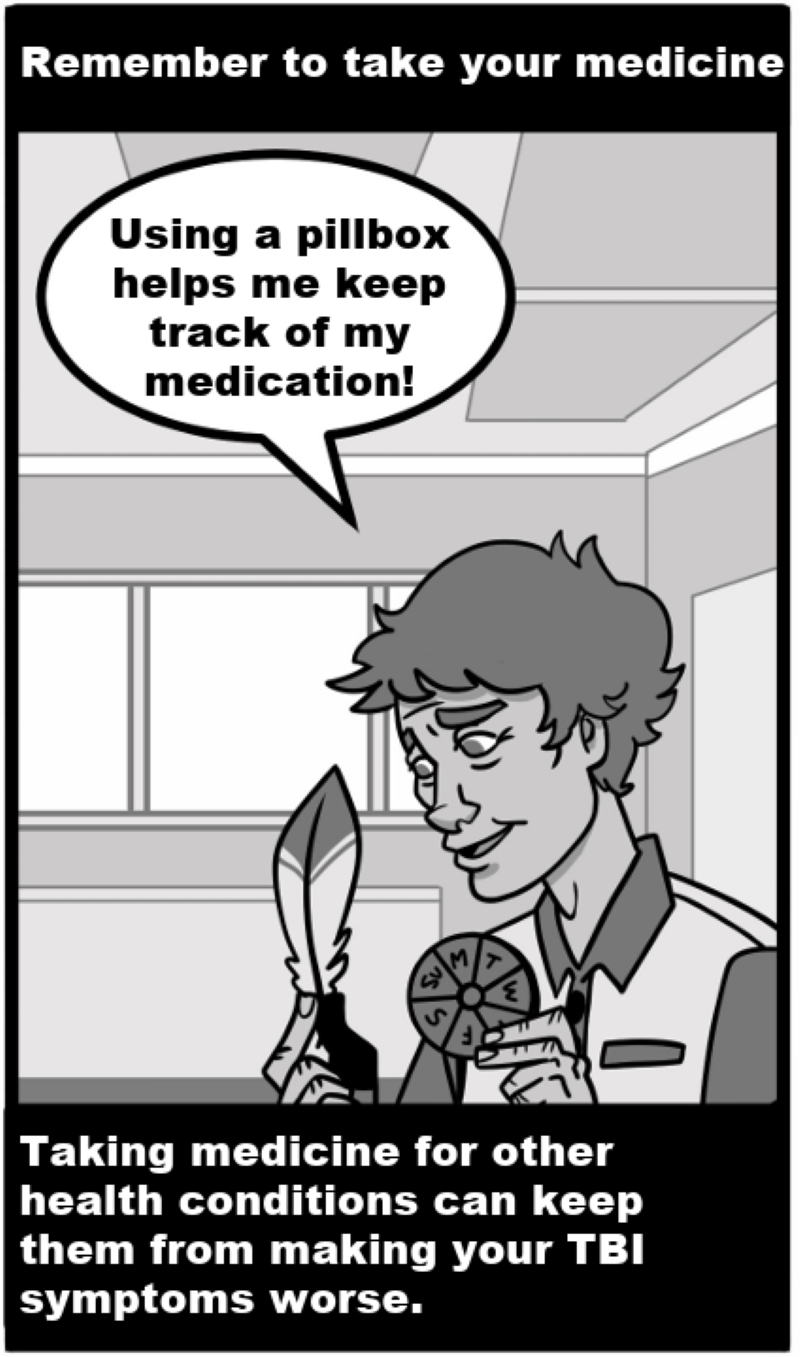
Remember to take your medicine

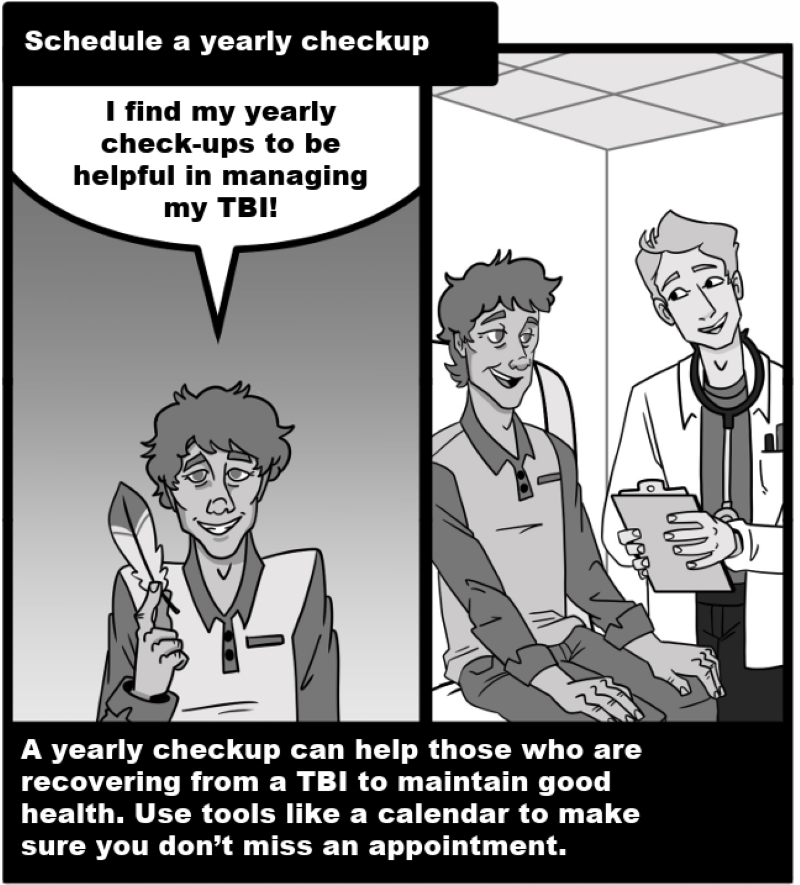
Schedule a yearly checkup

Stay Physically Fit After TBI

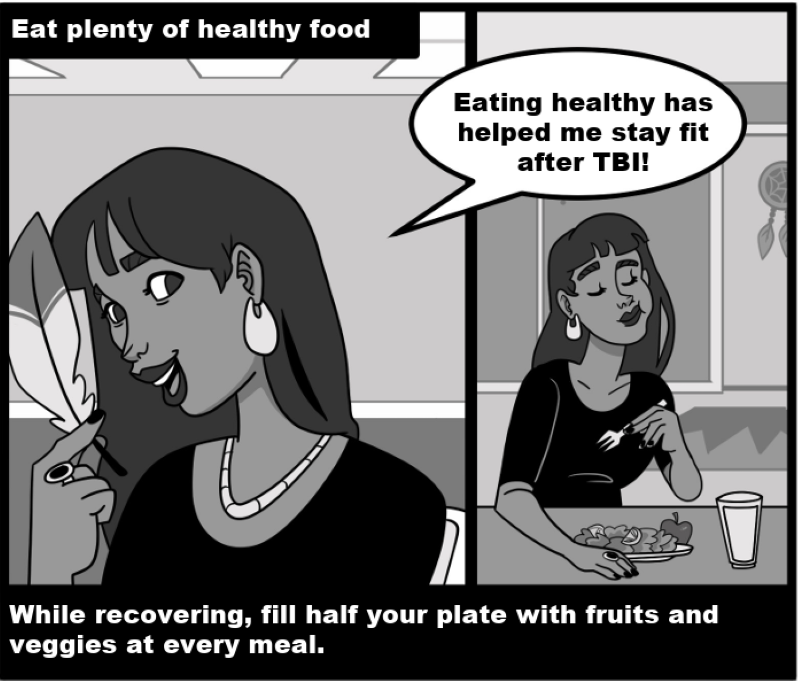
Eat plenty of healthy food

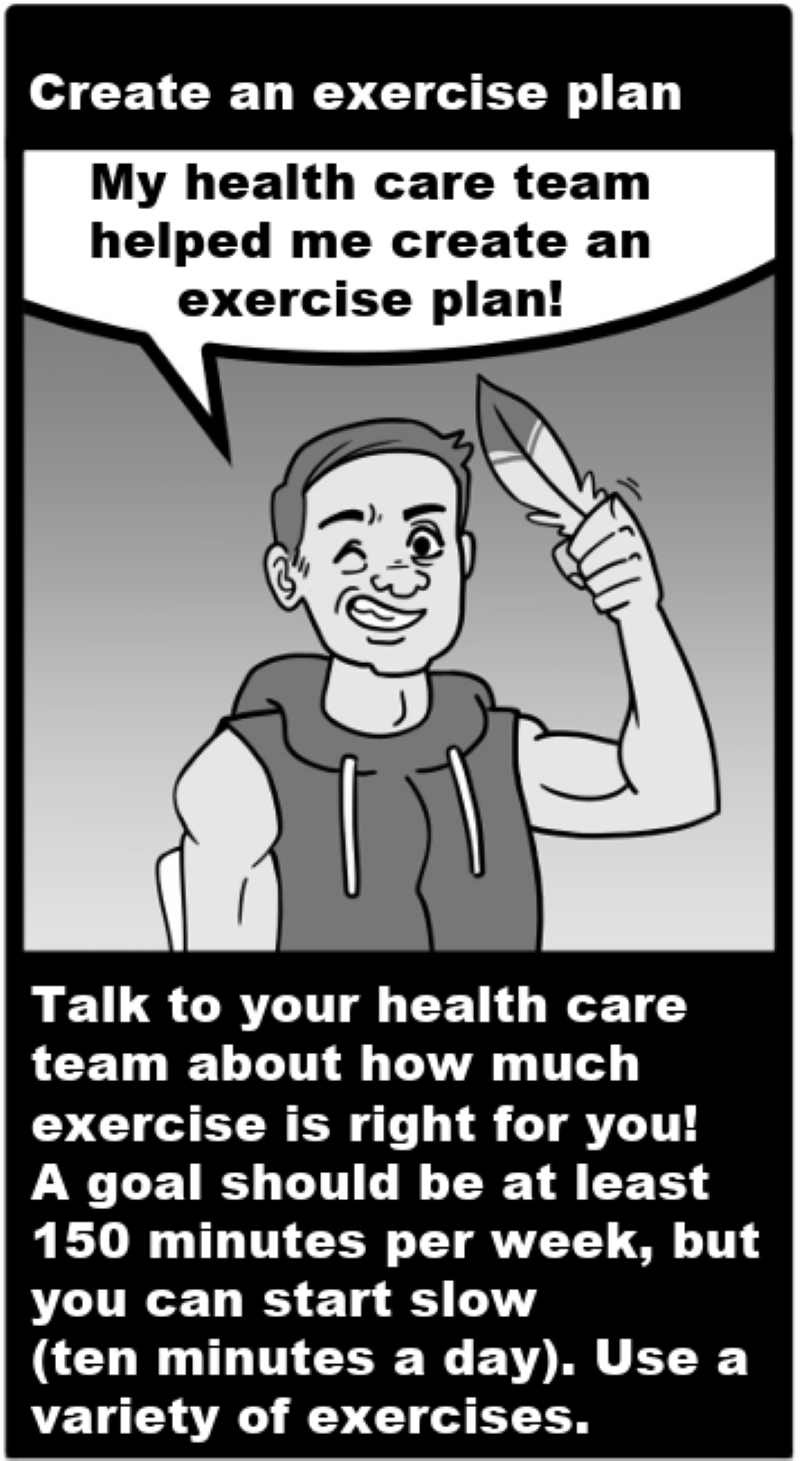
Talk to your health care team about how much exercise is right for you! A goal should be at least 150 minutes per week, but you can start slow (ten minutes a day). Use a variety of exercises.

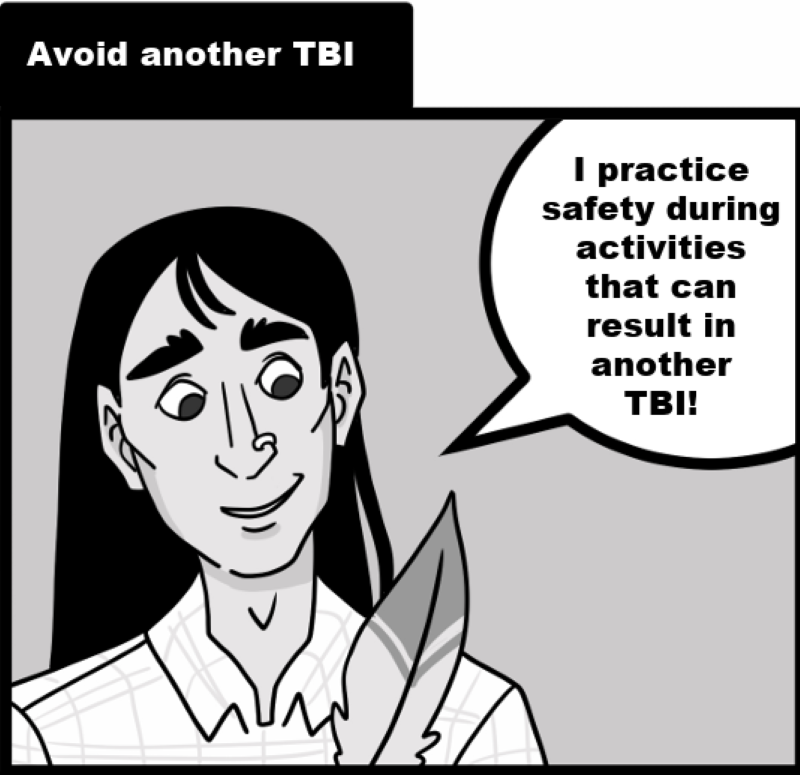
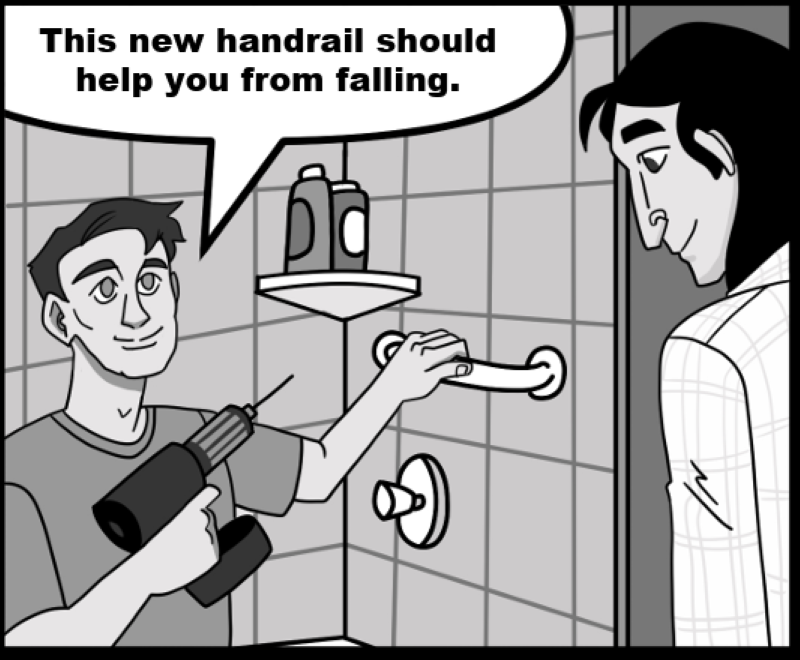
Avoid another TBI

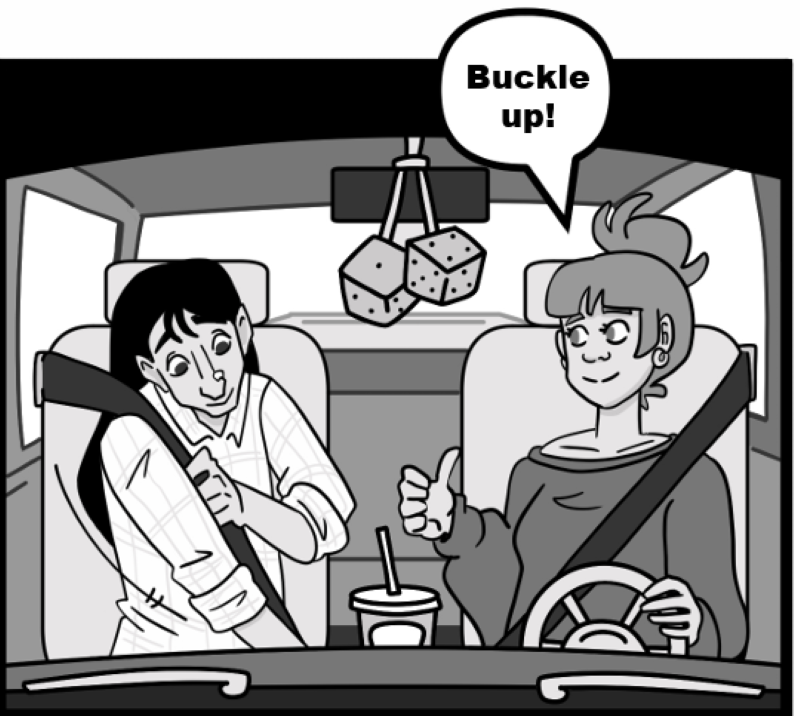
Buckle up!

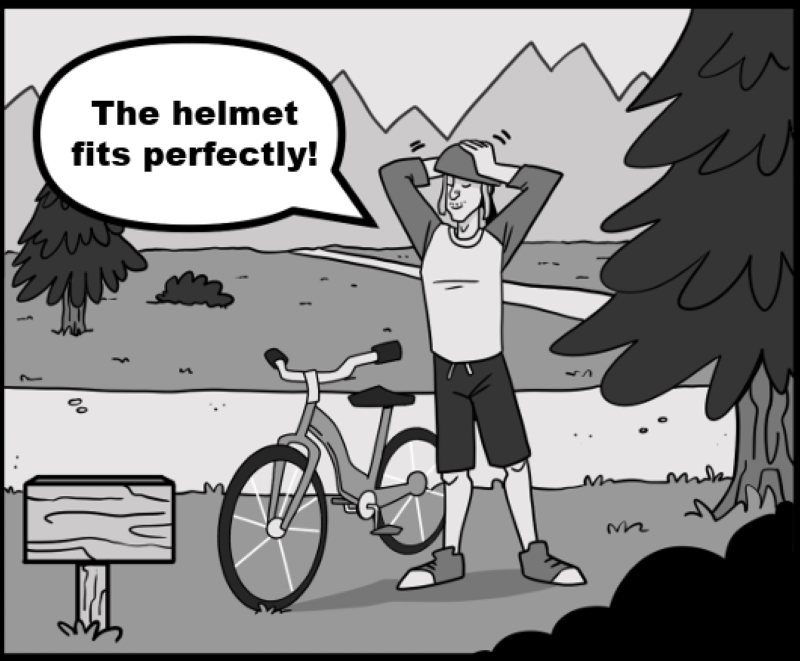
The helmet fits perfectly!

This new handrail should help you from falling.

Another TBI can hinder a person’s recovery from their first TBI. It can also make it hard to stay fit. Make sure to practice safety for all activities to avoid another TBI.

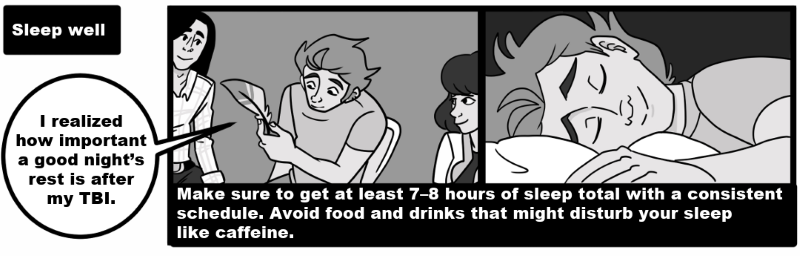
Sleep well - Make sure to get at least 7–8 hours of sleep total with a consistent schedule. Avoid food and drinks that might disturb your sleep like caffeine.

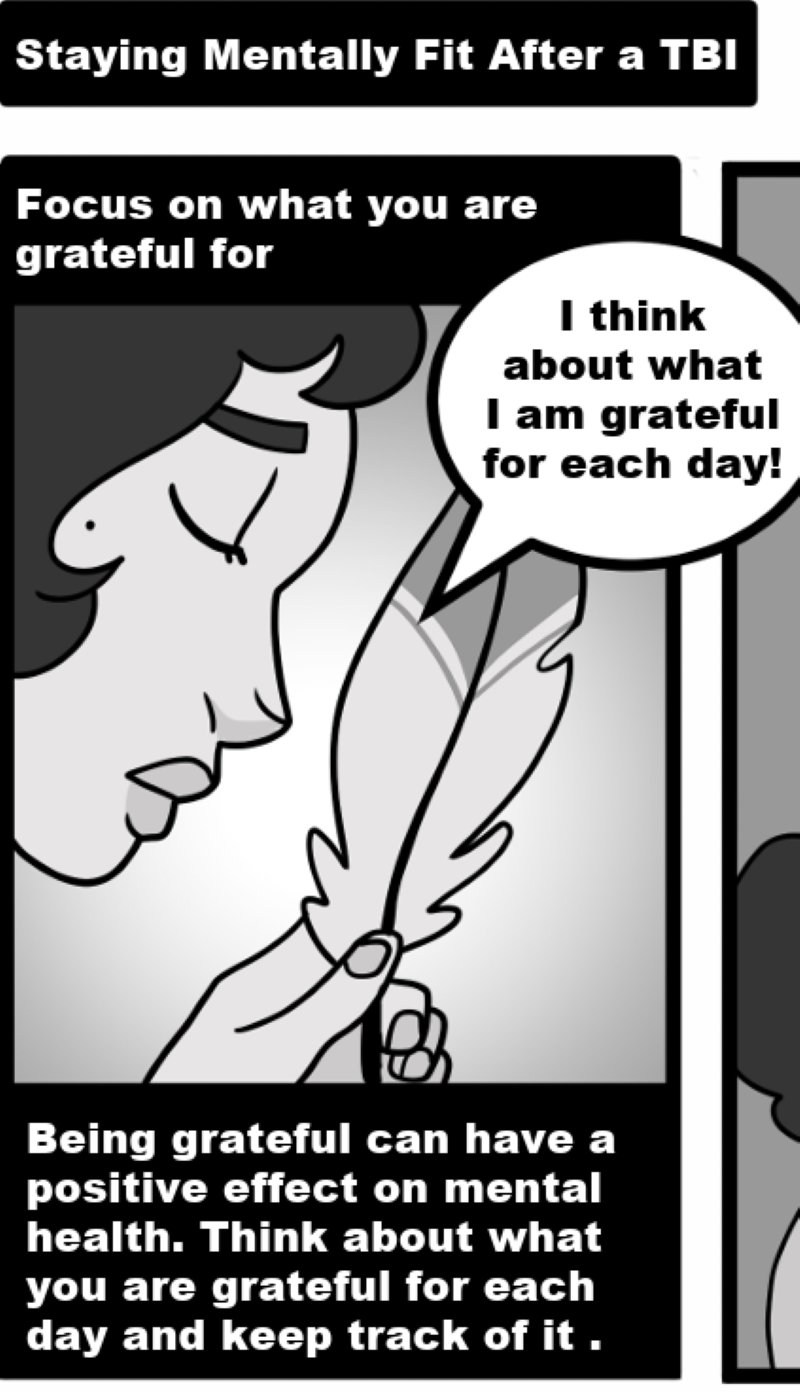
Staying Mentally Fit After a TBI - Being grateful can have a positive effect on mental health. Think about what you are grateful for each day and keep track of it.

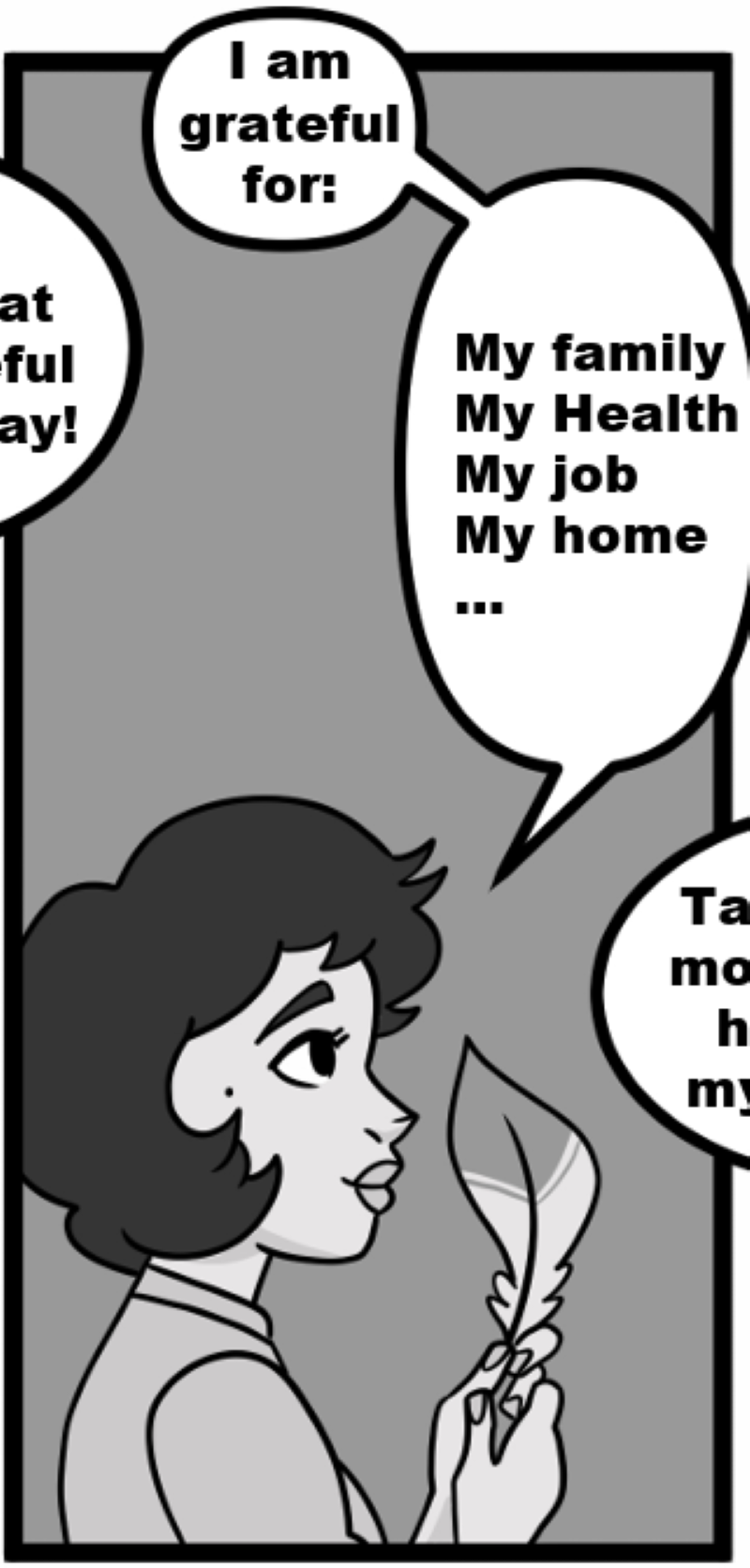
I am grateful for: My family, My Health, My job, My home

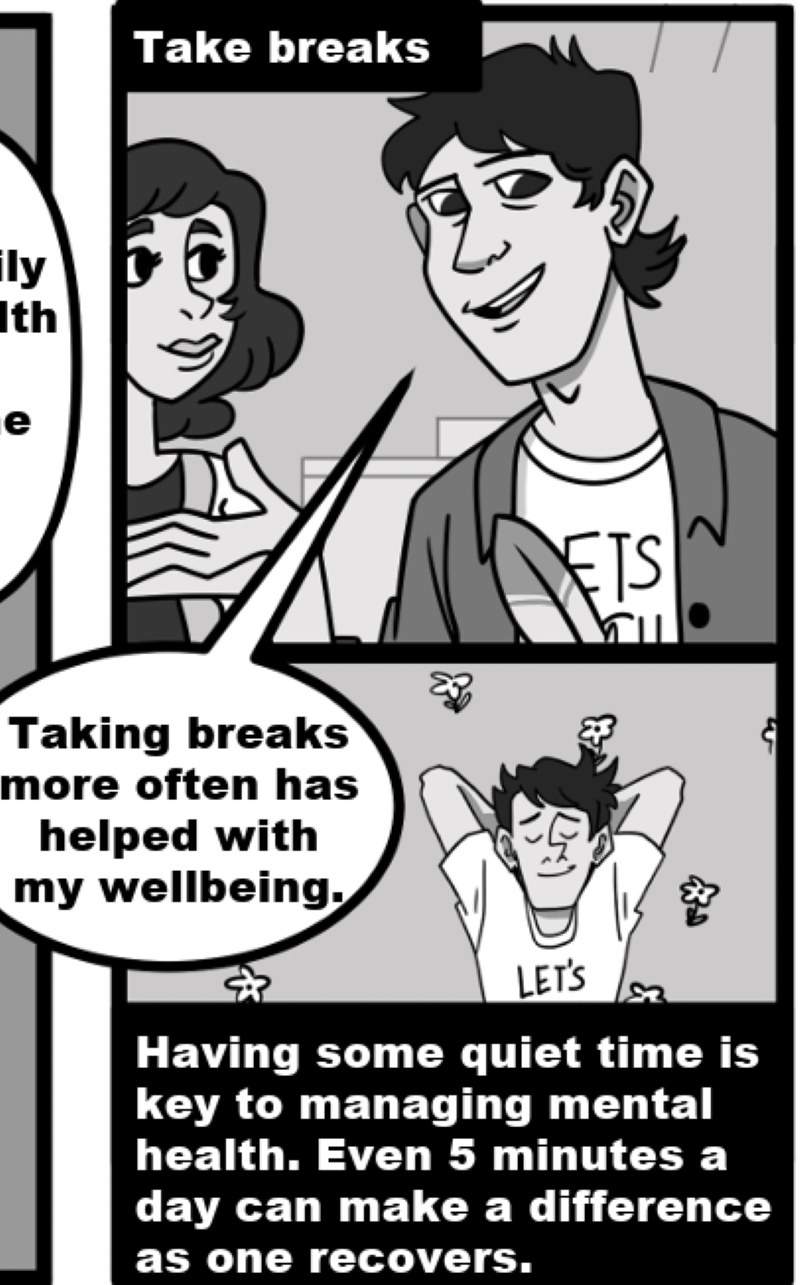
Having some quiet time is key to managing mental health. Even 5 minutes a day can make a difference as one recovers.

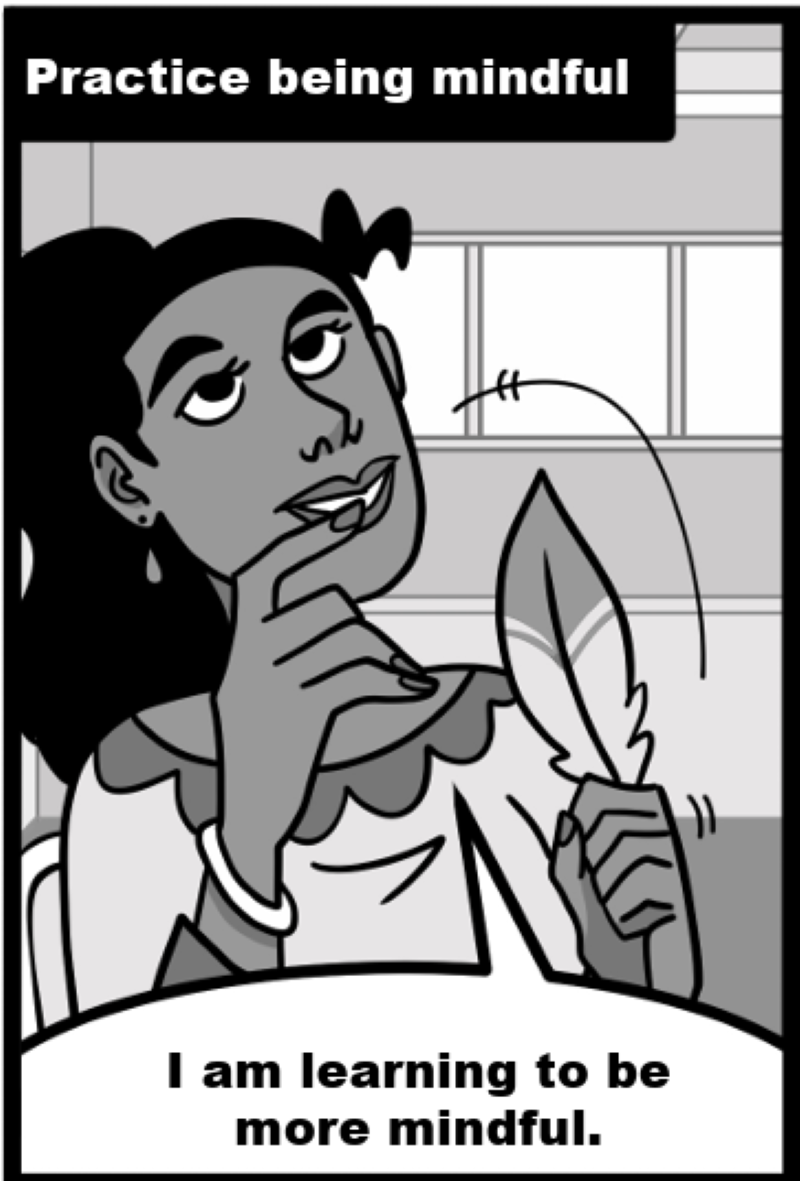
Practice being mindful

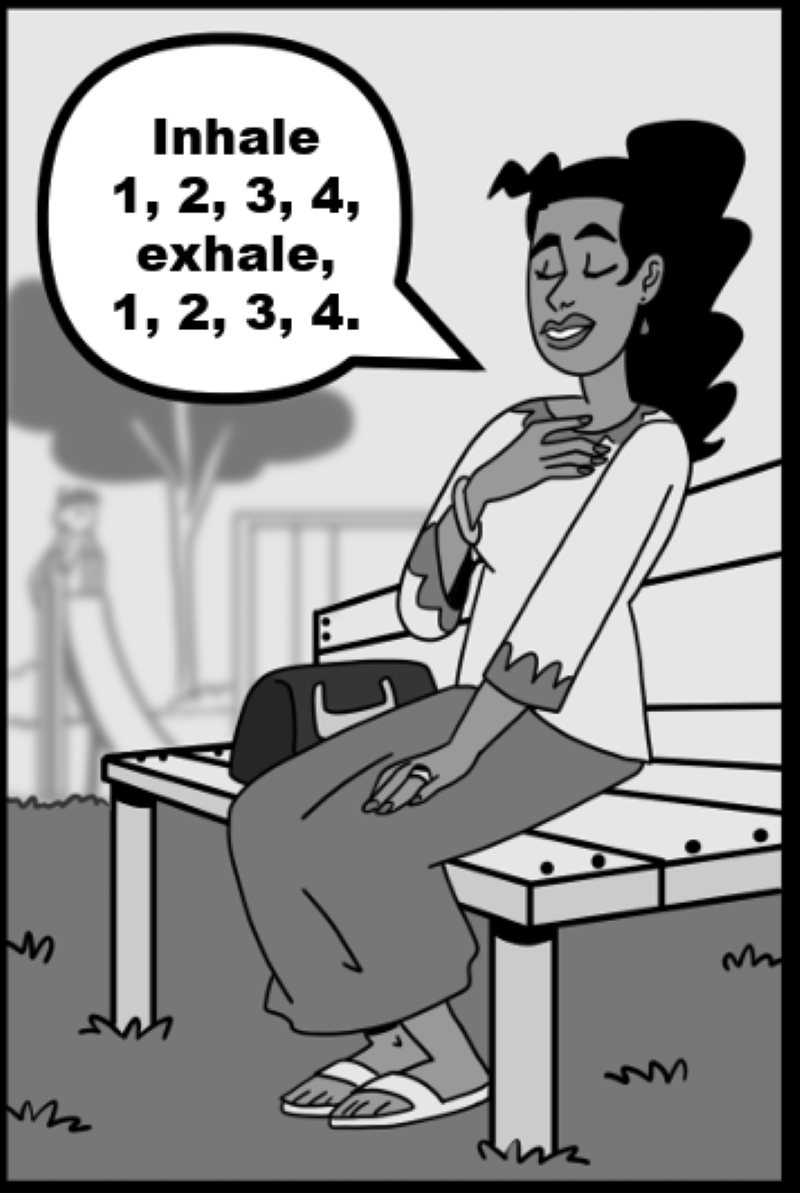
Inhale 1, 2, 3, 4, exhale, 1, 2, 3, 4.

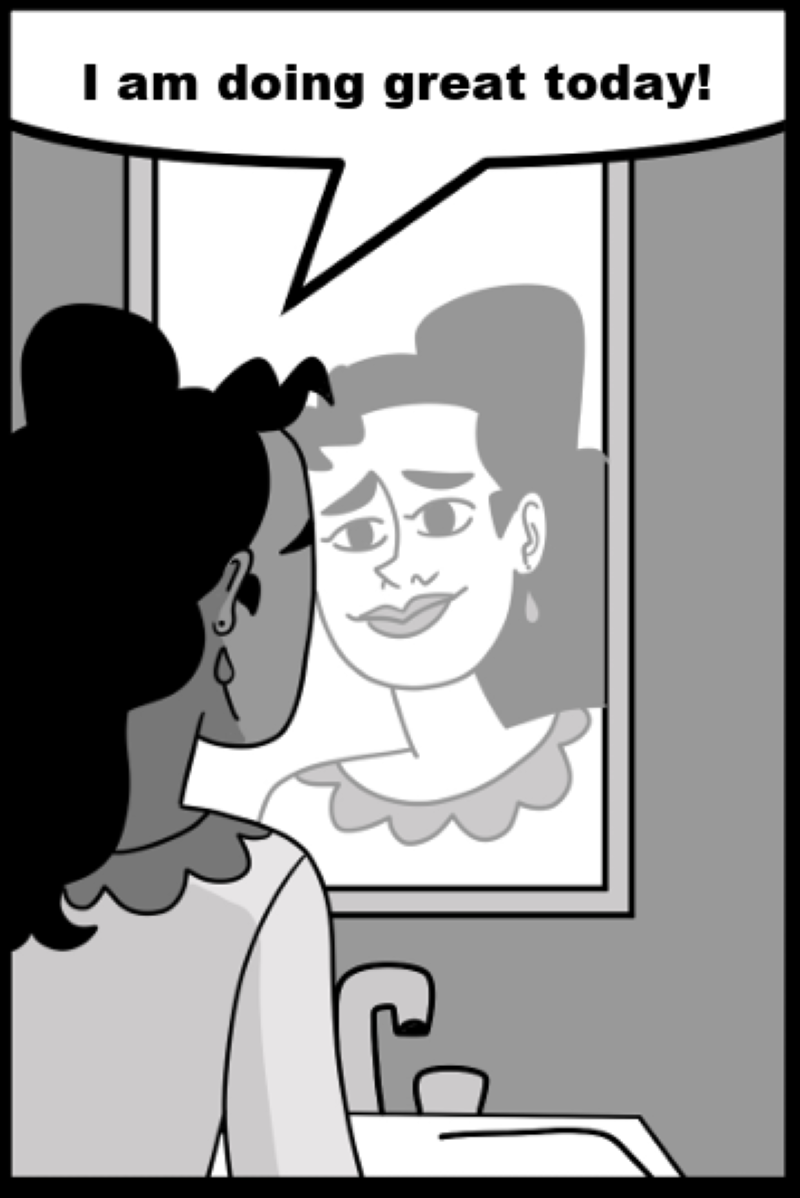
I am doing great today!

Mindfulness is being aware of what you are thinking and feeling in that moment without judgement. Check-in on yourself, do some calm breathing, and ask yourself how you are doing.

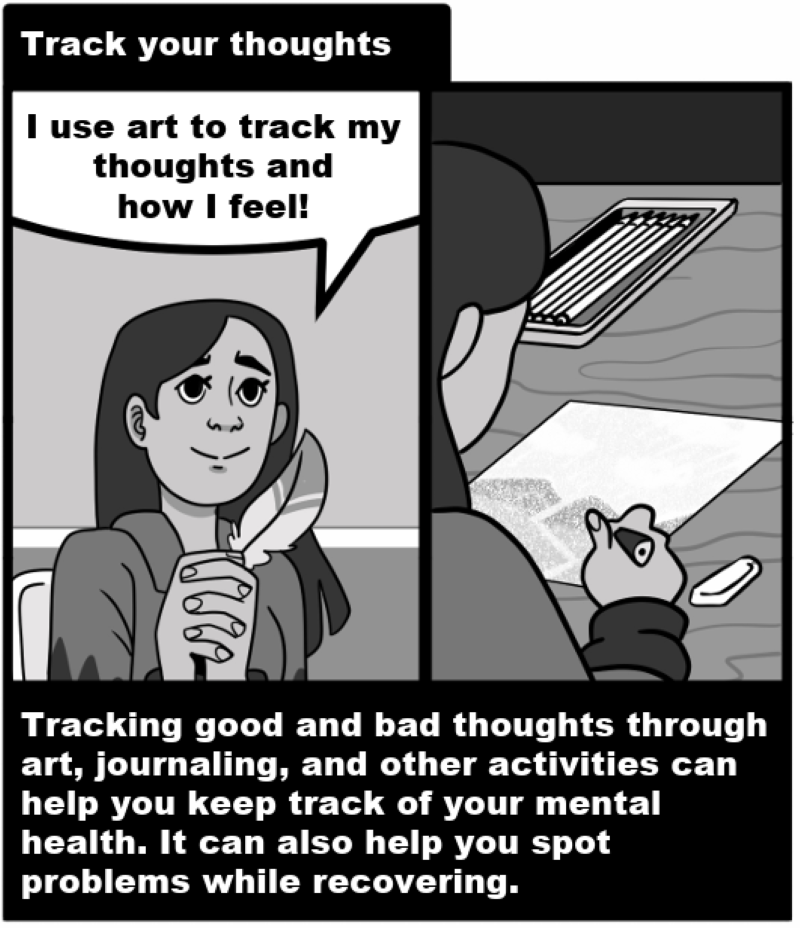
Track your thoughts - Tracking good and bad thoughts through art, journaling, and other activities can help you keep track of your mental health. It can also help you spot problems while recovering.

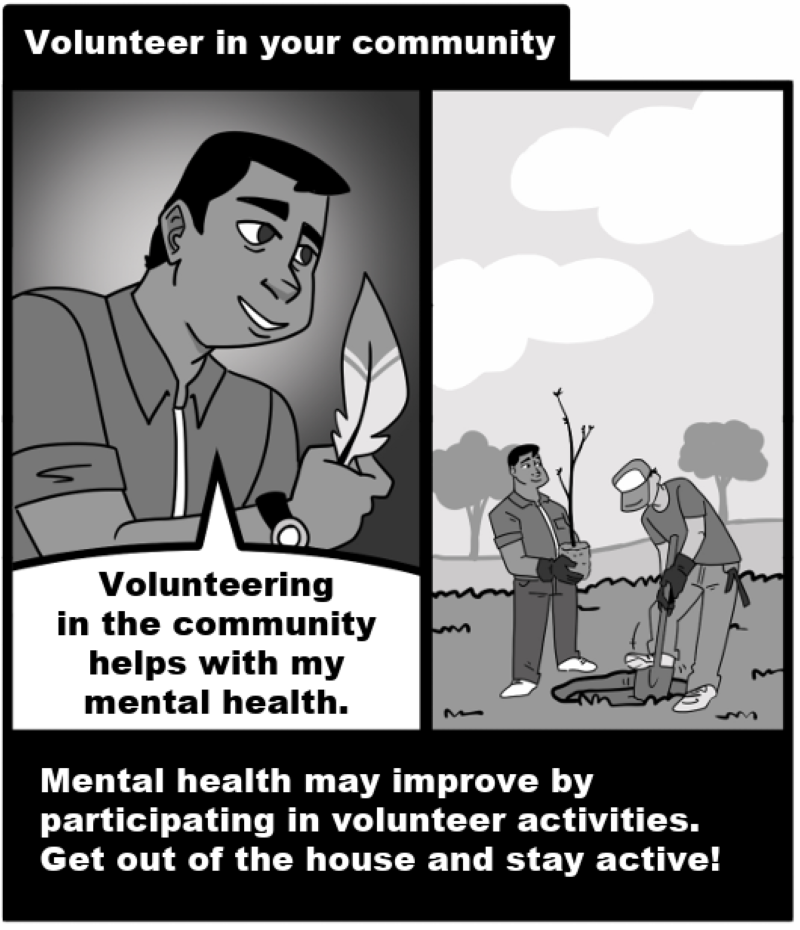
Volunteer in your community - Mental health may improve by participating in volunteer activities. Get out of the house and stay active!

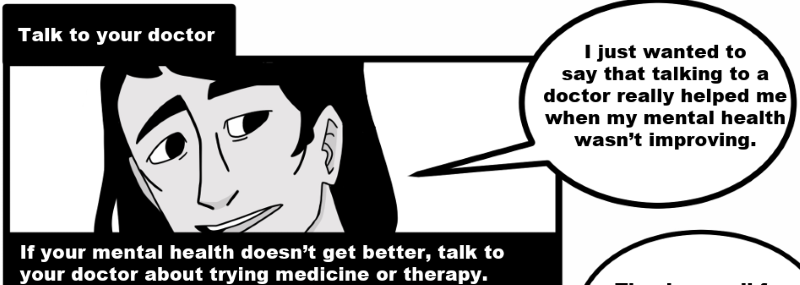
If your mental health doesn’t get better, talk to your doctor about trying medicine or therapy.

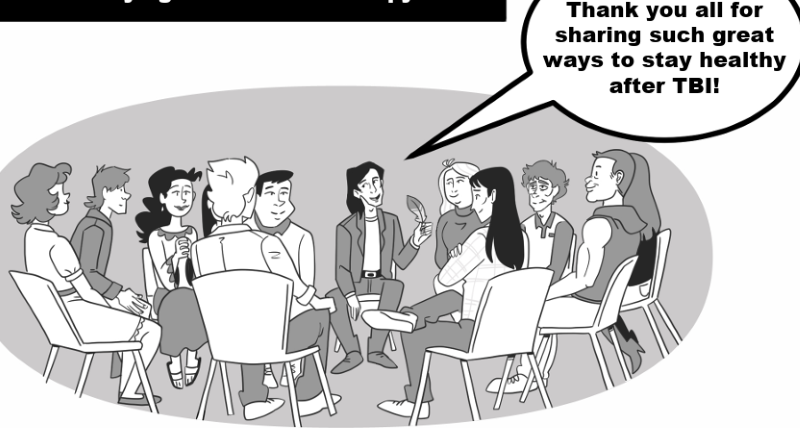
Thank you all for sharing such great ways to stay healthy after TBI!

Source, Disclaimer, and Copyright

Get involved with the MSKTC

 Become a Burn ambassador
 Participate in Burn research
 Meet the Burn Model Systems

Get involved with the MSKTC

 Become a SCI ambassador
 Participate in SCI research
 Meet the SCI Model Systems

Get involved with the MSKTC

 Become a TBI ambassador
 Participate in TBI research
 Meet the TBI Model Systems

About Us

Our Awards

Contact Us

Subscribe to E-Newsletter

Lists*


Follow Us:

facebook icon Twitter Icon Instagram Icon Linkedin Icon YouTube icon SoundCloud icon

Resources

Spinal Cord Injury

Traumatic Brain Injury

Burn Injury


Recursos en Español

LME Recursos en Español

TBI Recursos en Español

Quemaduras Recursos en Español


Share & Promote

Model Systems
 

Knowledge Translation Toolkit


Technical Assistance for Model Systems Grantees
© 2026 MSKTC


Disclaimer

Information on this site is not meant to replace the advice of a medical professional. You should consult your health care provider regarding specific medical concerns or treatment. The contents of this site were developed under grant number 90DPKT0009 from the National Institute on Disability, Independent Living, and Rehabilitation Research (NIDILRR). NIDILRR is a Center within the Administration for Community Living (ACL), Department of Health and Human Services (HHS). The contents of this website do not necessarily represent the policy of NIDILRR, ACL, HHS, and you should not assume endorsement by the federal government.