This infocomic provides information on memory problems after TBI and strategies to manage memory problems.

Managing Memory Problems After Traumatic Brain Injury (TBI)

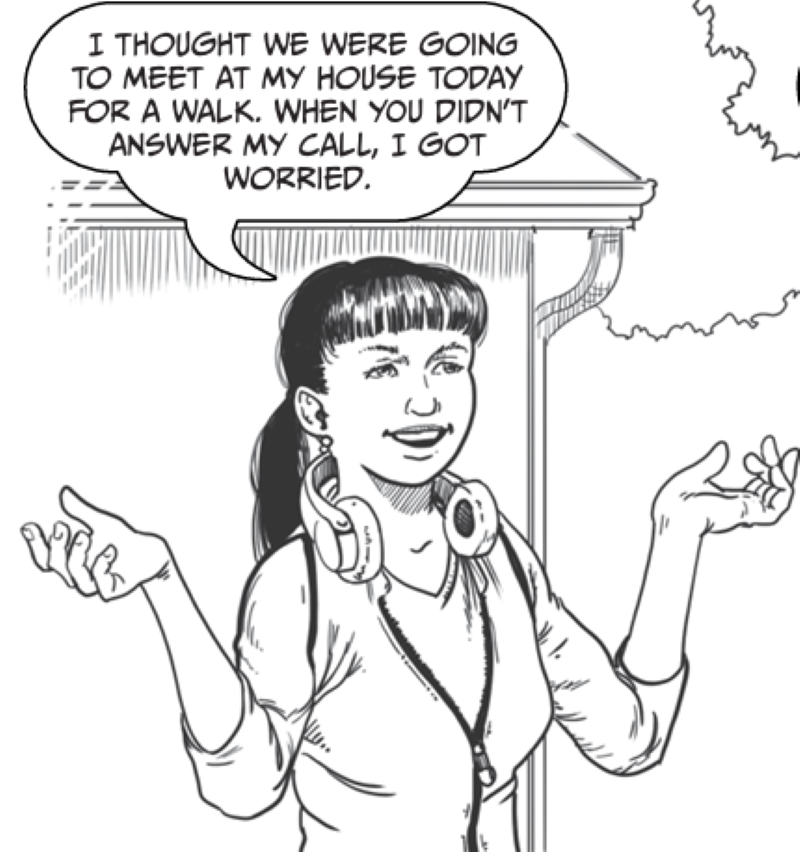
 I thought we were going to meet at my house today for a walk. When you didn’t answer my call, I got worried.

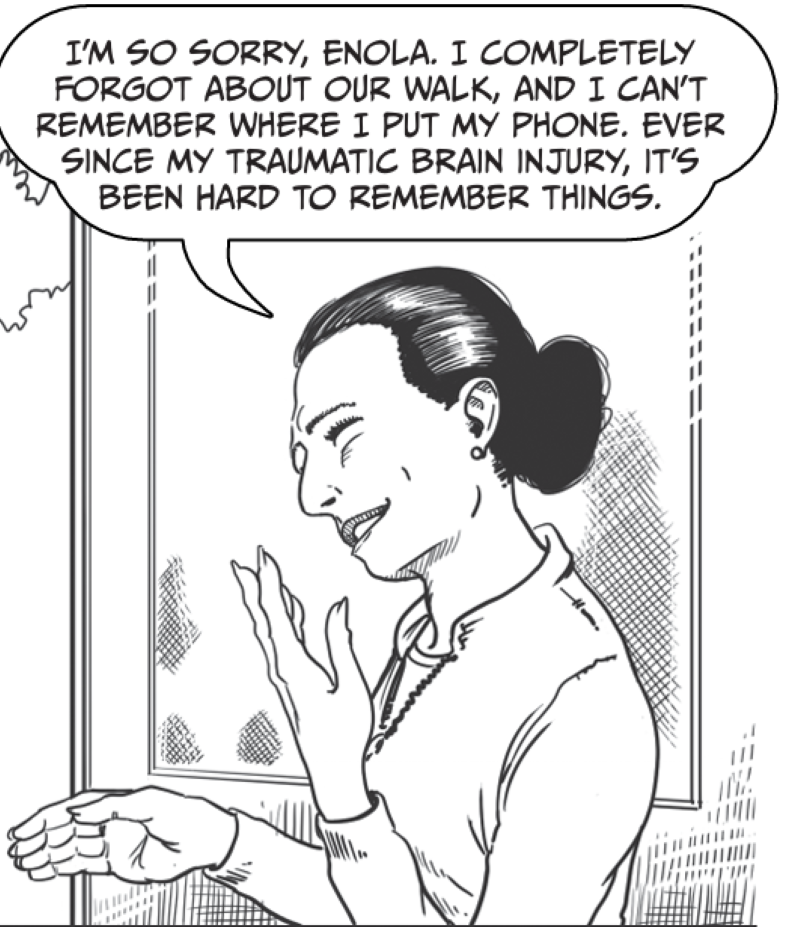
I’m so sorry, enola. I completely forgot about our walk, and I can’t remember where I put my phone. ever since my traumatic brain injury, it’s been hard to remember things.

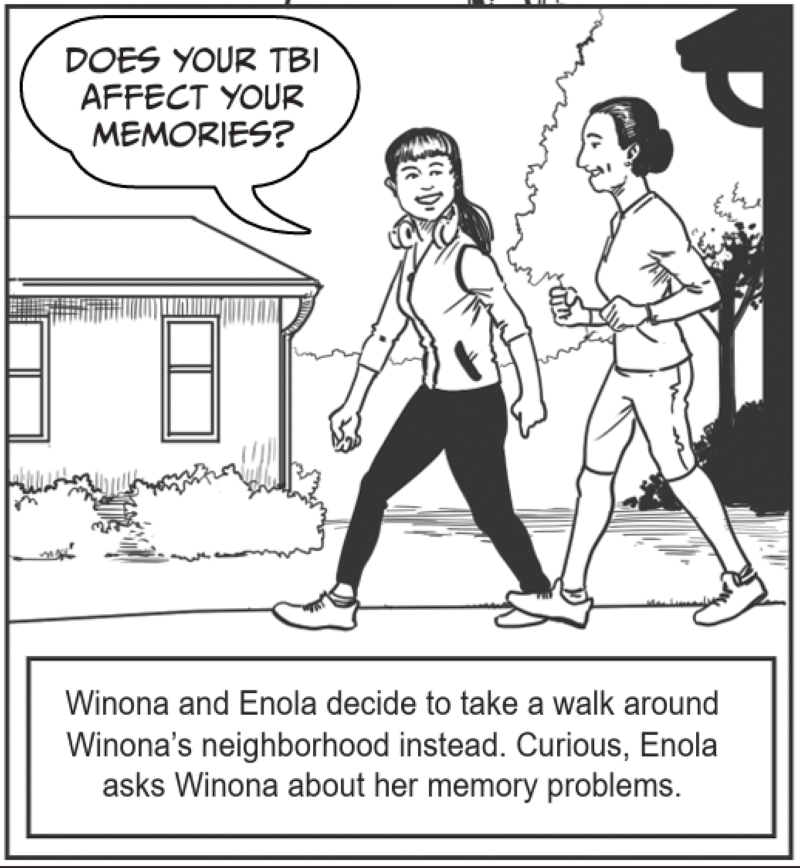
Winona and Enola decide to take a walk around Winona’s neighborhood instead. Curious, Enola asks Winona about her memory problems.

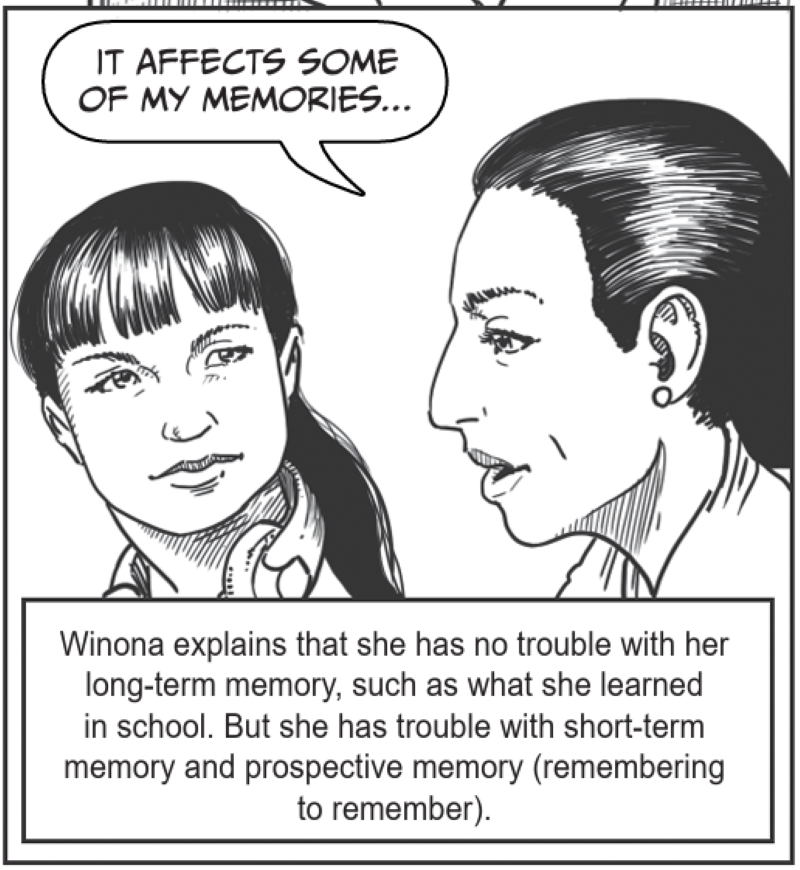
Winona explains that she has no trouble with her long-term memory, such as what she learned in school. But she has trouble with short-term memory and prospective memory (remembering to remember).

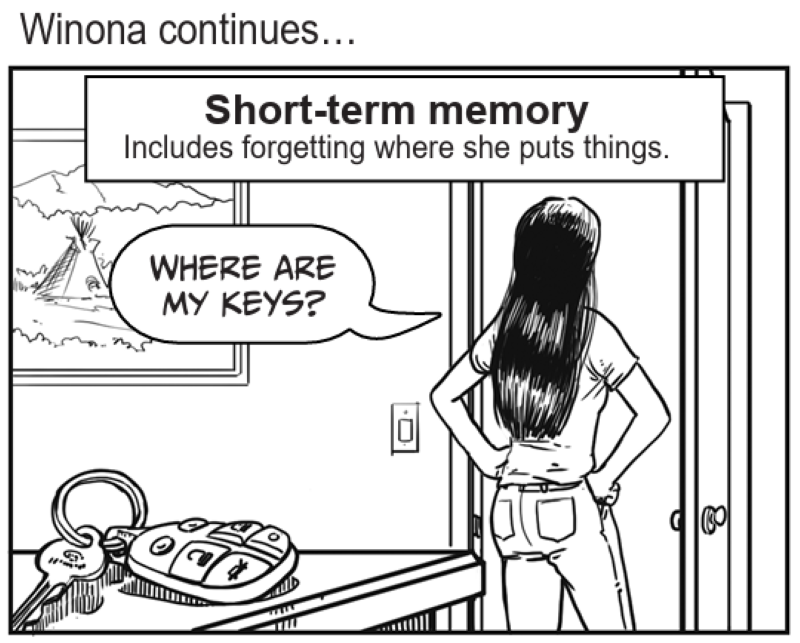
Short-term memory Includes forgetting where she puts things.

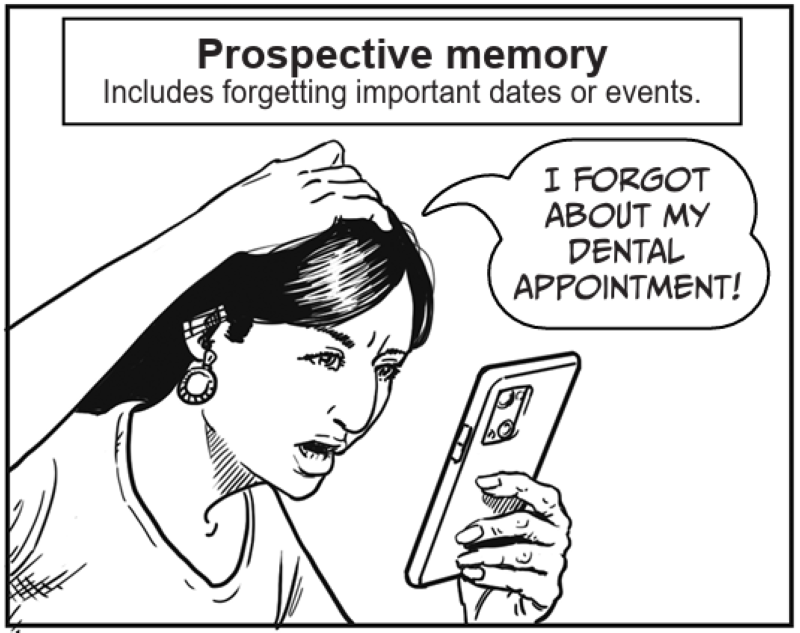
Prospective memory Includes forgetting important dates or events.

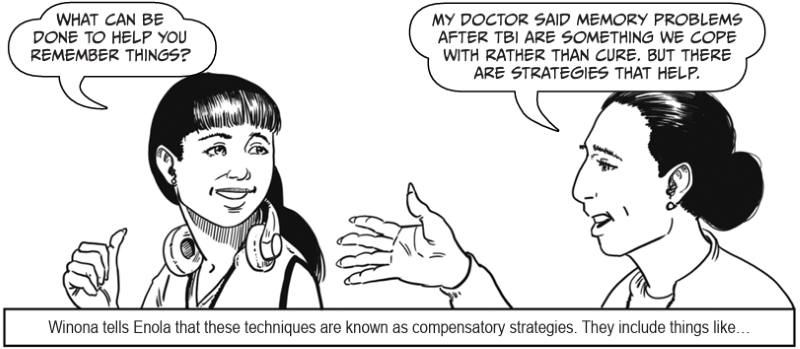
My doctor said memory problems after tbi are something we cope with rather than cure. but there are strategies that help.

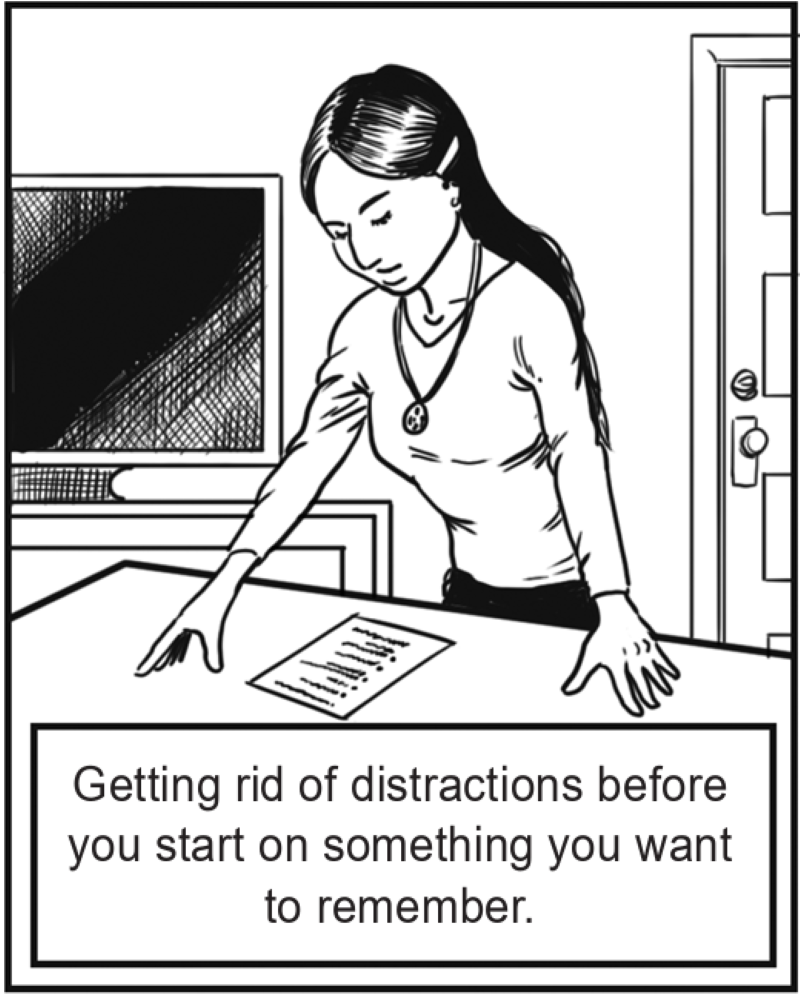
Getting rid of distractions before you start on something you want to remember.

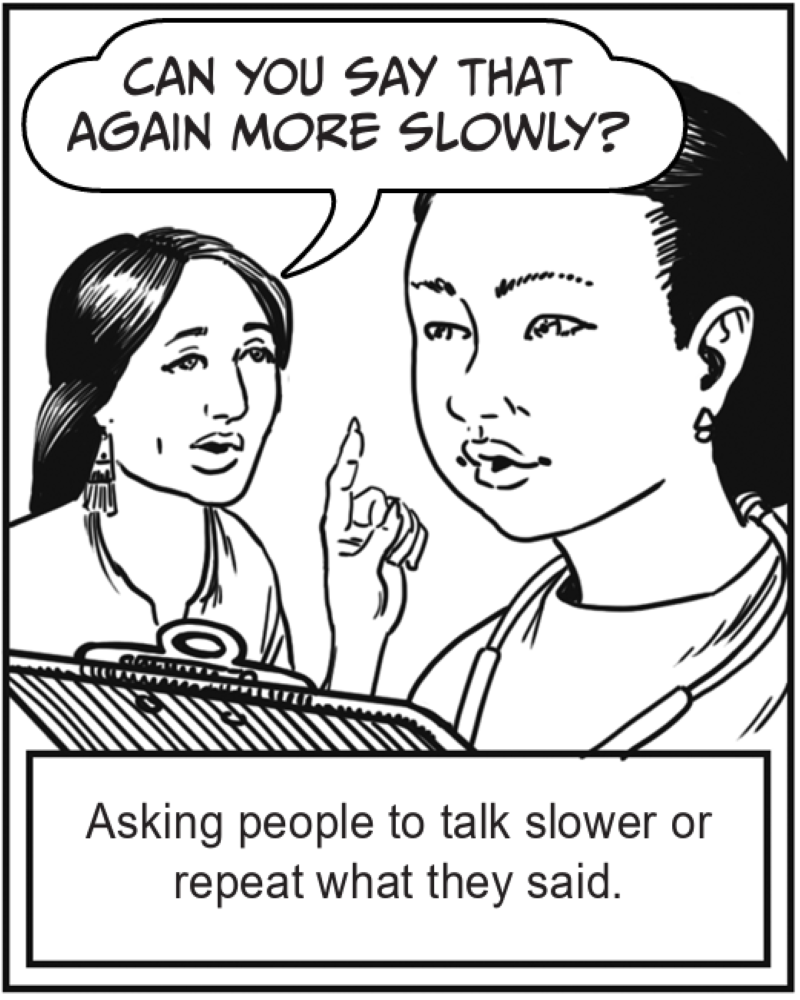
Asking people to talk slower or repeat what they said.

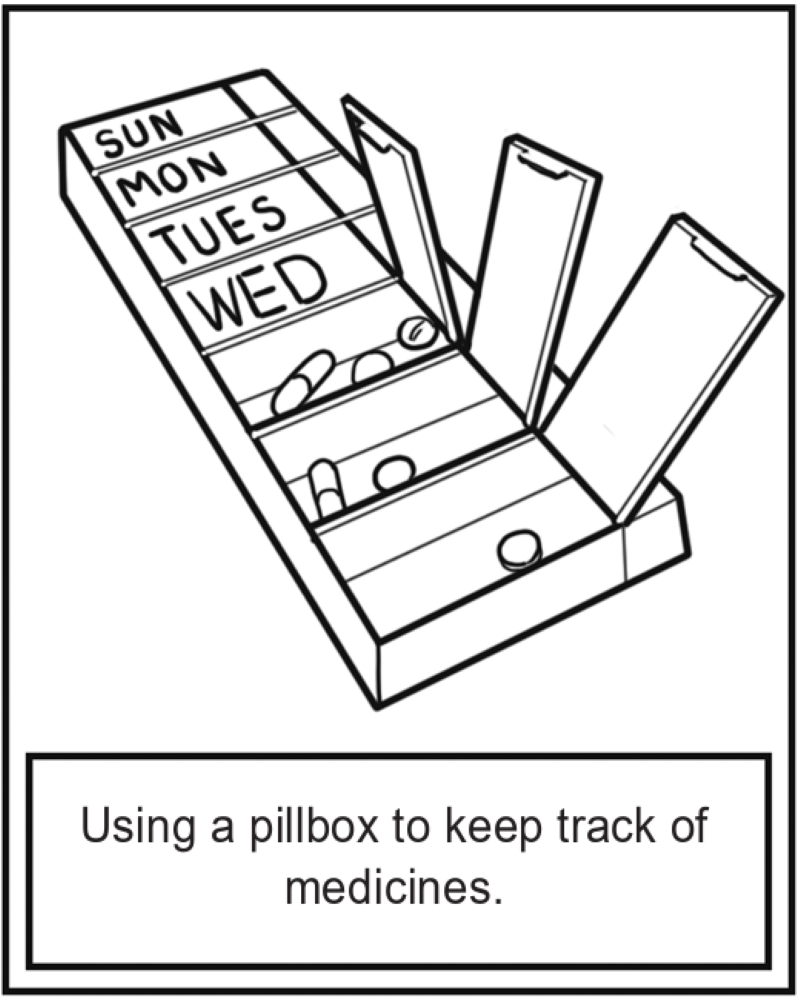
Using a pillbox to keep track of medicines.

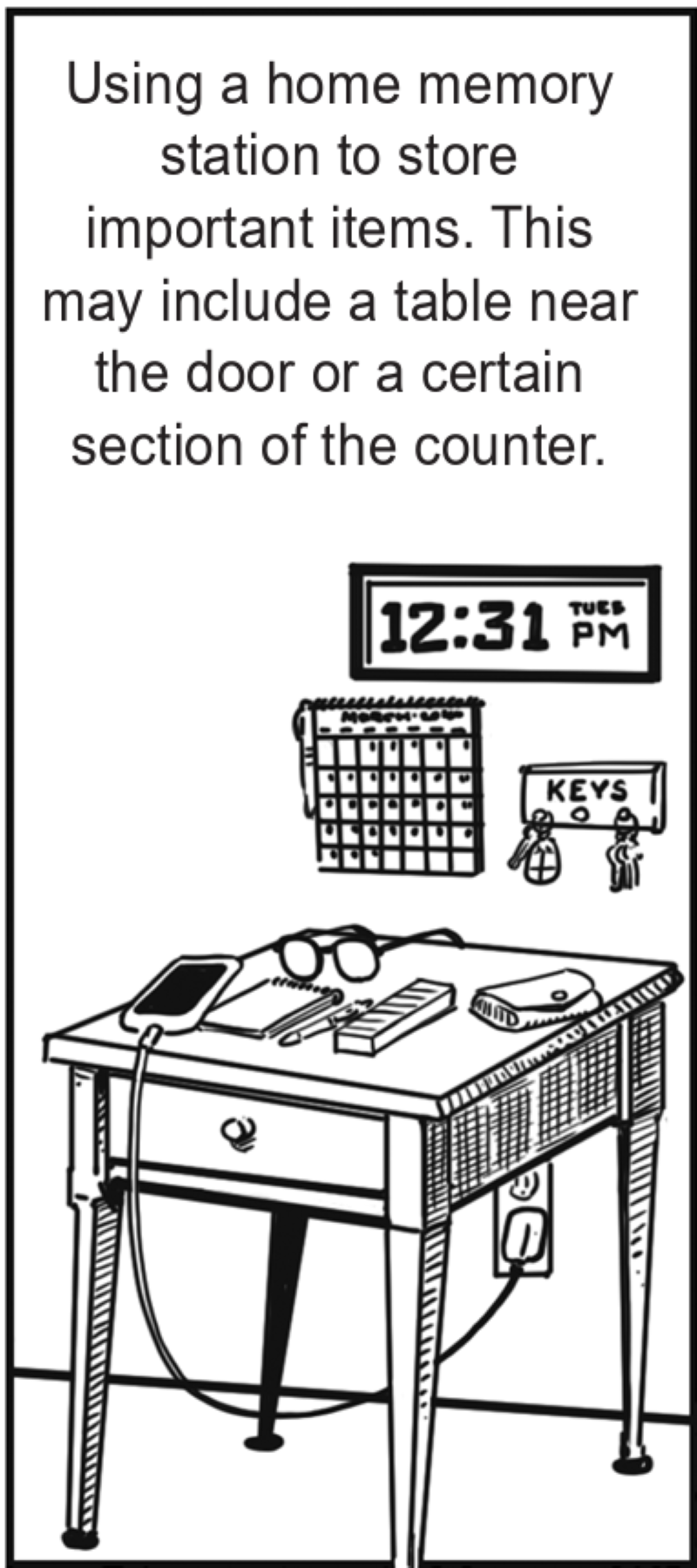
Using a home memory station to store  important items. This may include a table near the door or a certain section of the counter.

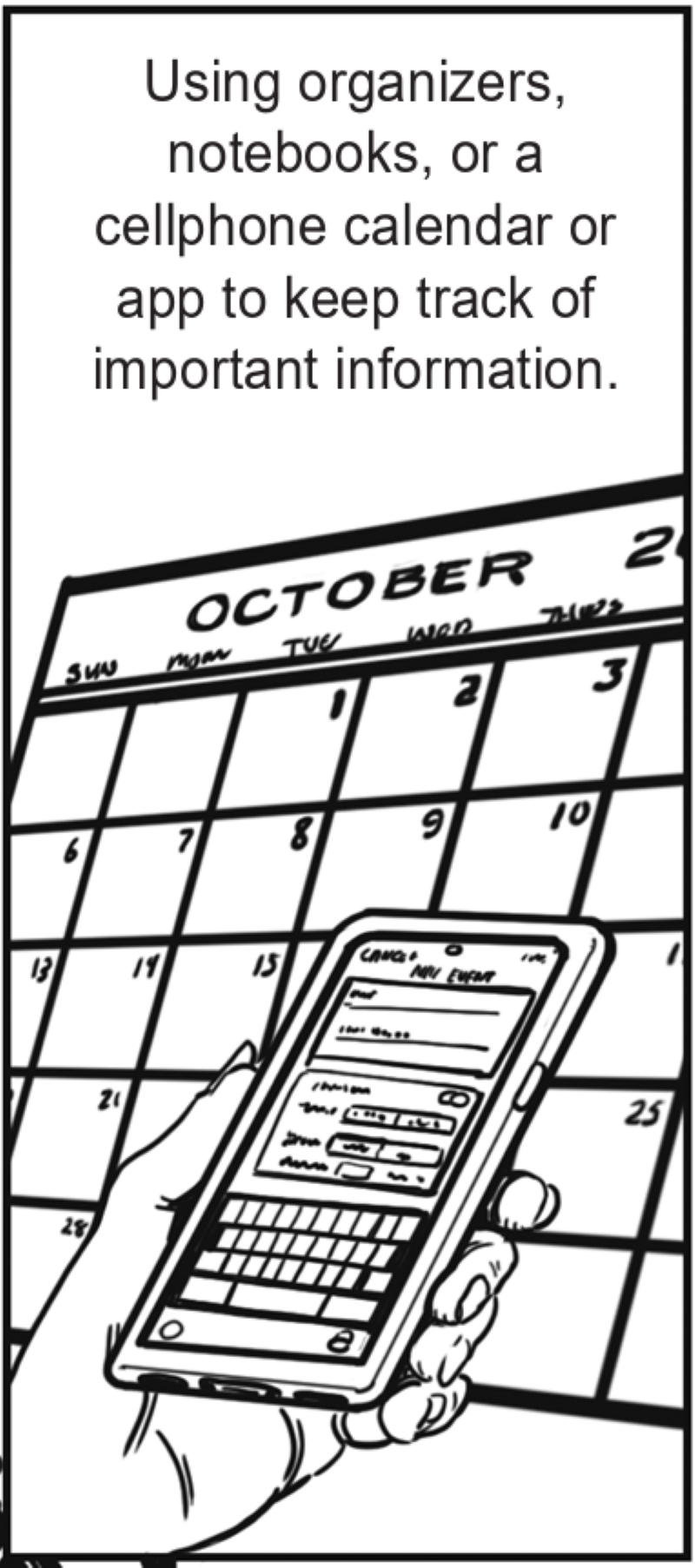
Using organizers, notebooks, or a cellphone calendar or app to keep track of important information.

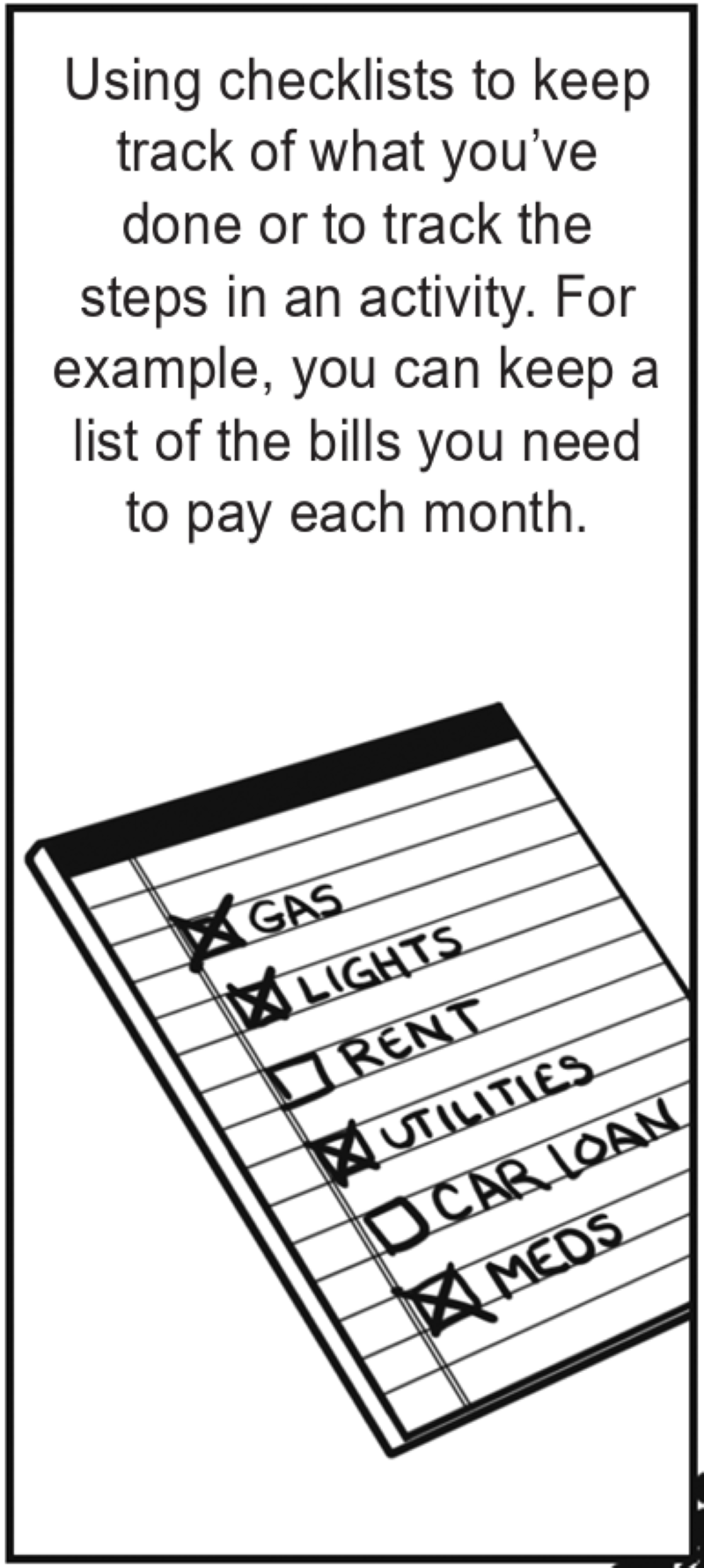
Using checklists to keep track of what you’ve done or to track the steps in an activity. For example, you can keep a list of the bills you need to pay each month.

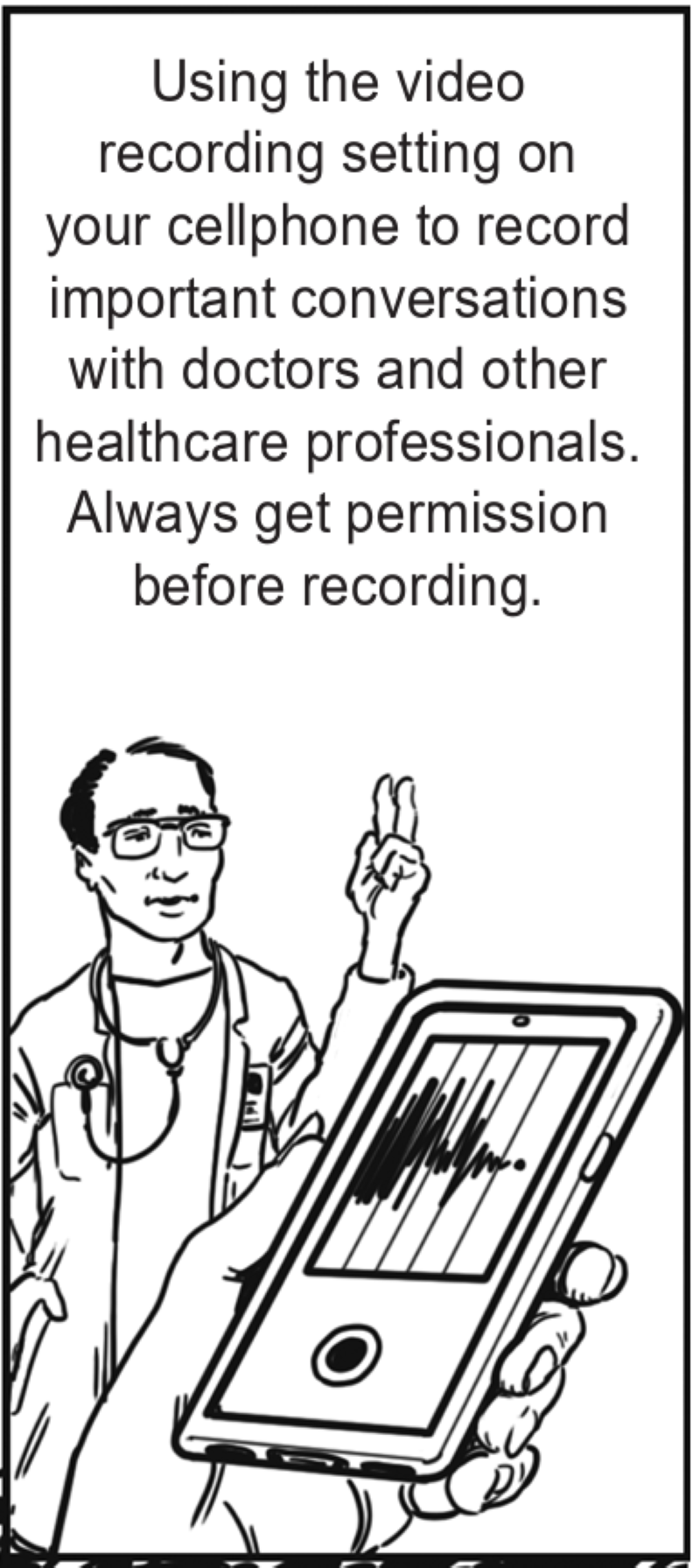
Using the video recording setting on your cellphone to record important conversations with doctors and other healthcare professionals. Always get permission before recording.

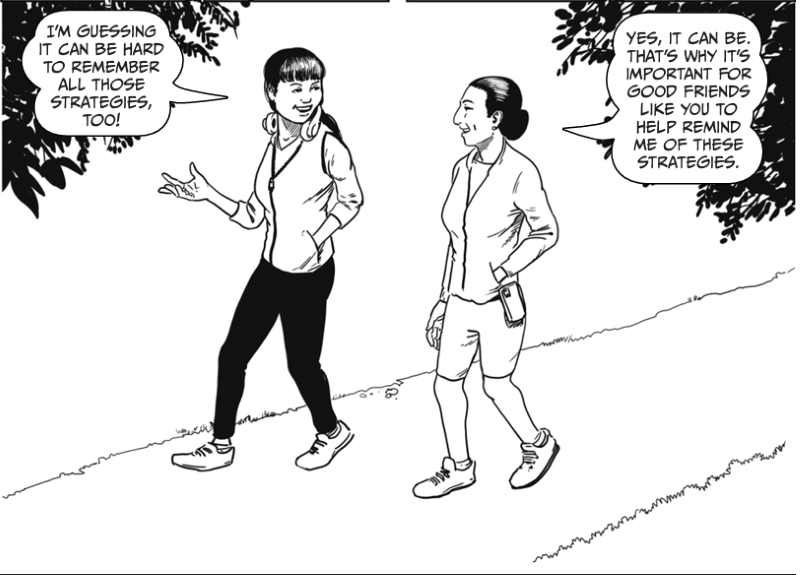
yes, it can be. that’s why it’s important for good friends like you to help remind me of these strategies.

Source, Disclaimer, and Copyright