This infocomic provides strategies on how to manage anger, irritability, and aggression after TBI.

Irritability, Anger, and Aggression After a Traumatic Brain Injury (TBI)

After Len’s TBI, his wife, Winnie, noticed that he gets irritable, angry, and aggressive more easily

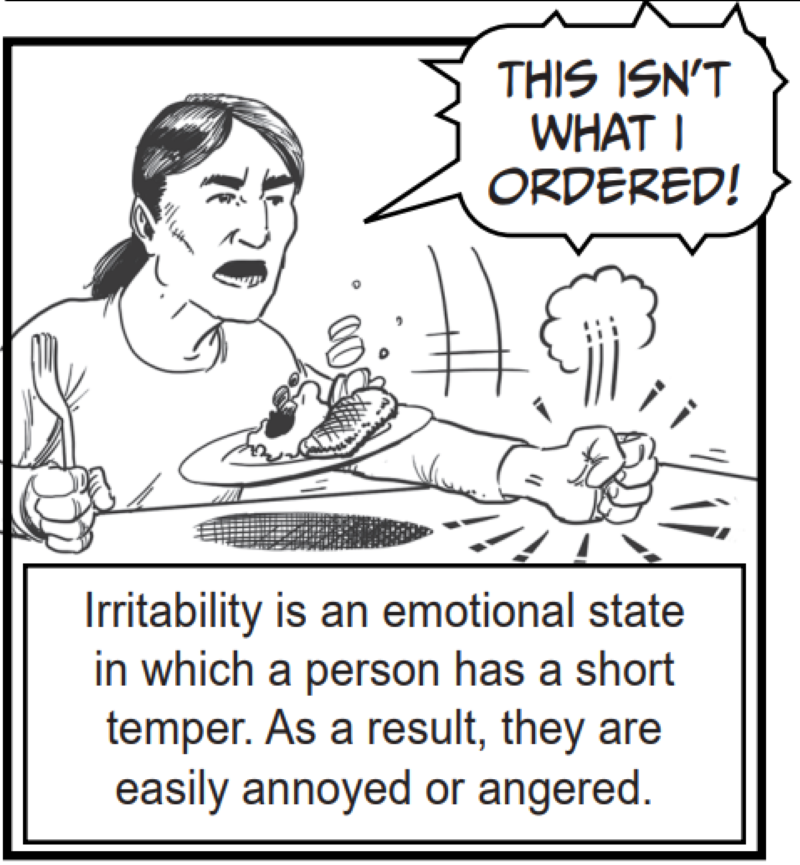
Irritability is an emotional state in which a person has a short temper. As a result, they are easily annoyed or angered.

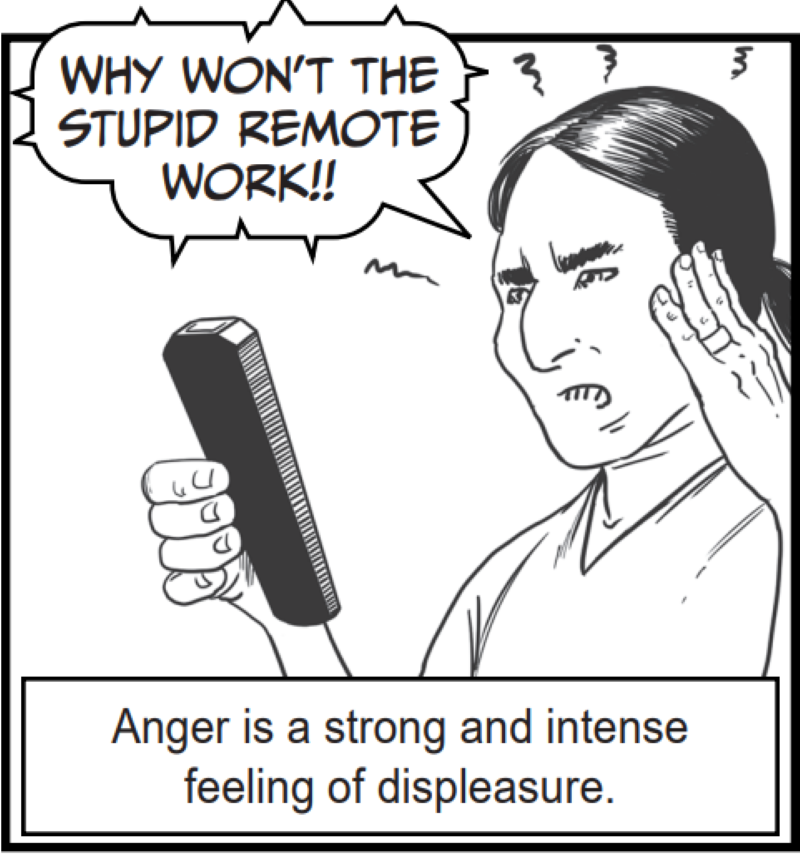
Anger is a strong and intense feeling of displeasure.

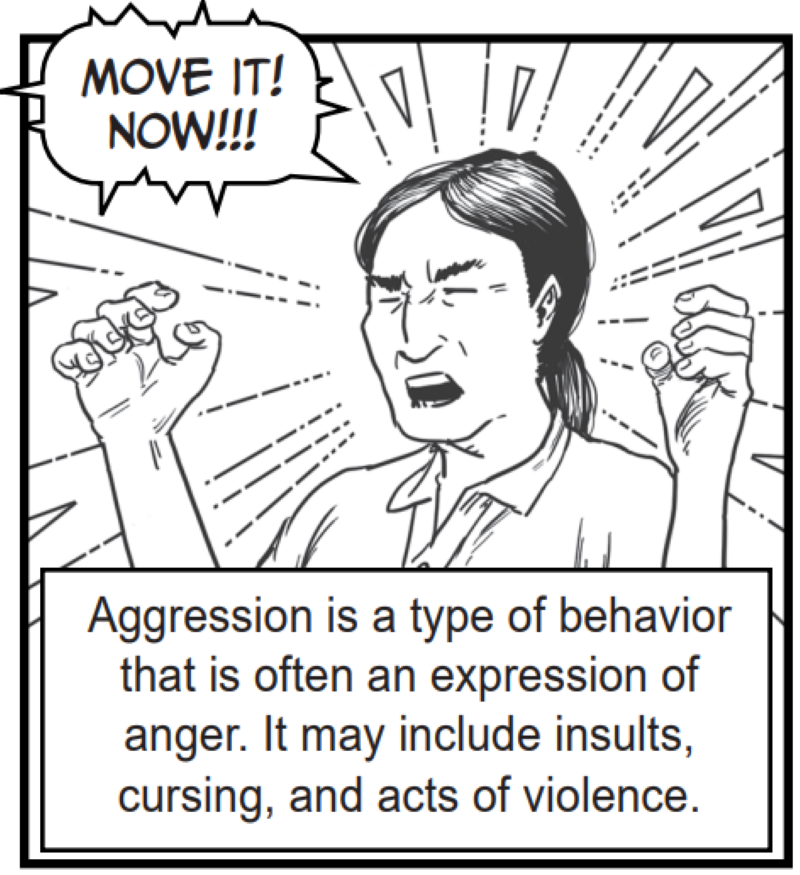
Aggression is a type of behavior that is often an expression of anger. It may include insults, cursing, and acts of violence.

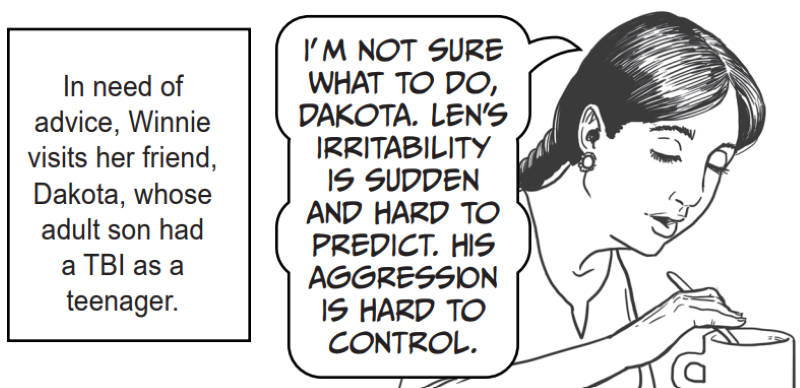
In need of advice, Winnie visits her friend, Dakota, whose adult son had a TBI as a teenager.

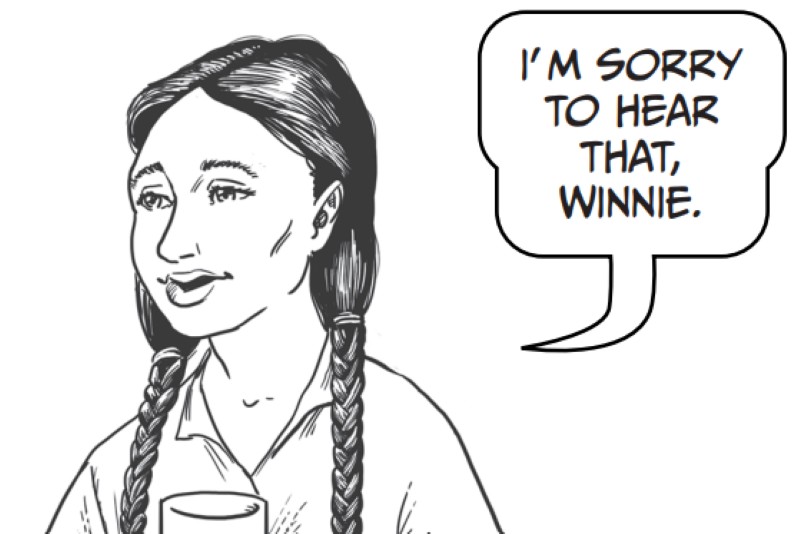
I’ m sorry to hear that, Winnie

Dakota also tells Winnie that anger, irritability, and aggression are more common in people with TBI.

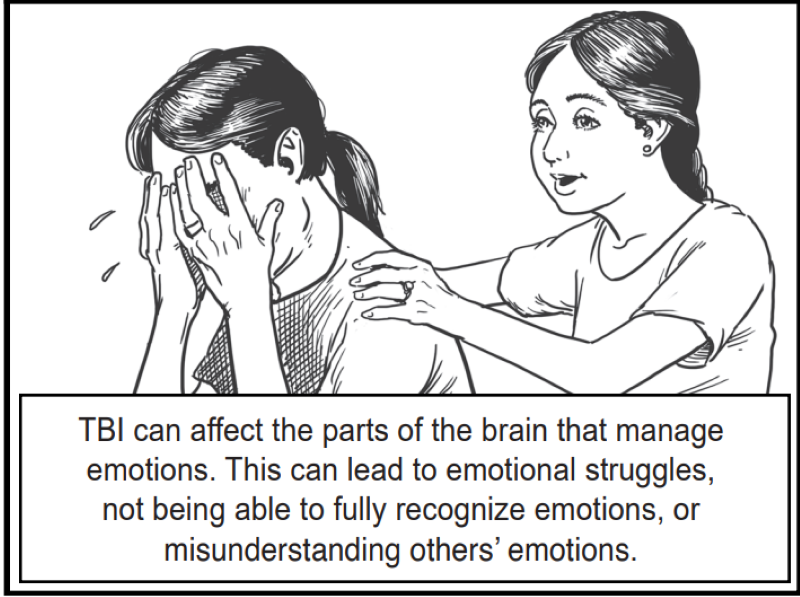
TBI can affect the parts of the brain that manage emotions. This can lead to emotional struggles, not being able to fully recognize emotions, or misunderstanding others’ emotions.

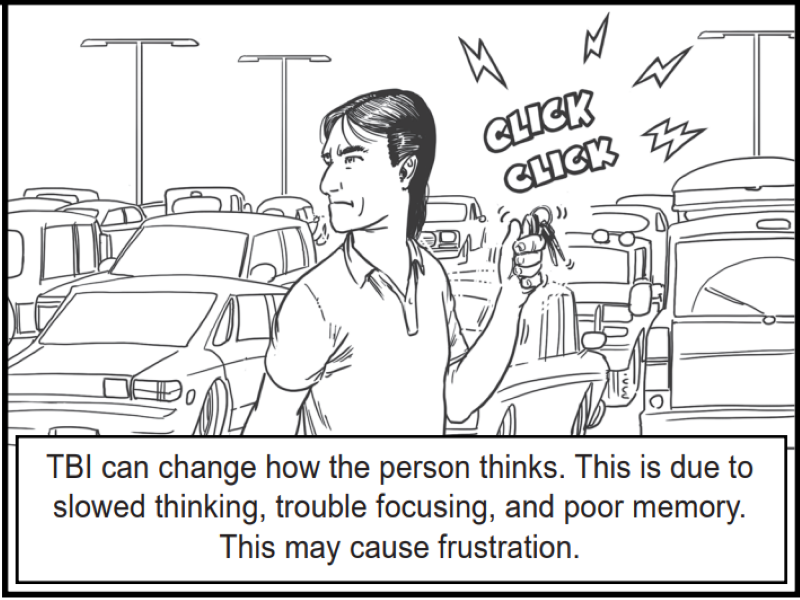
TBI can change how the person thinks. This is due to slowed thinking, trouble focusing, and poor memory. This may cause frustration.

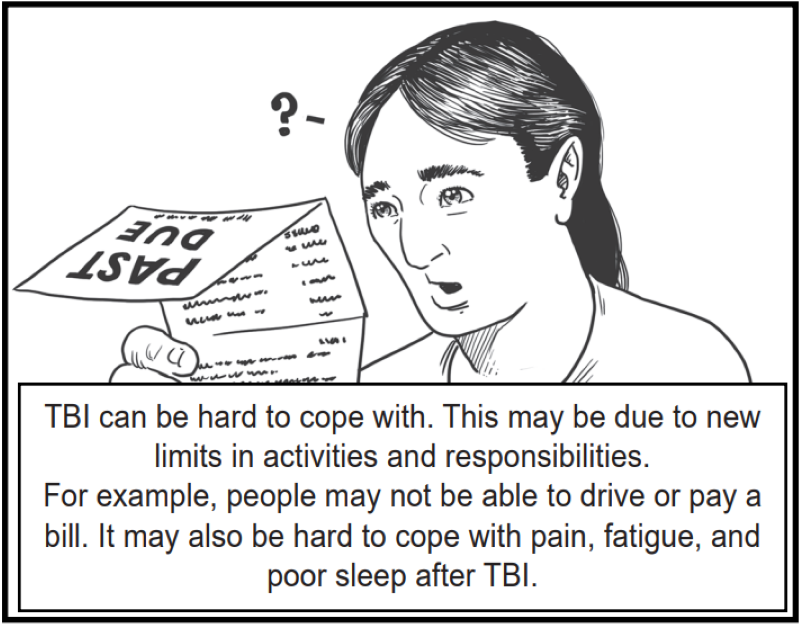
TBI can be hard to cope with. This may be due to new limits in activities and responsibilities. For example, people may not be able to drive or pay a bill. It may also be hard to cope with pain, fatigue, and poor sleep after TBI.
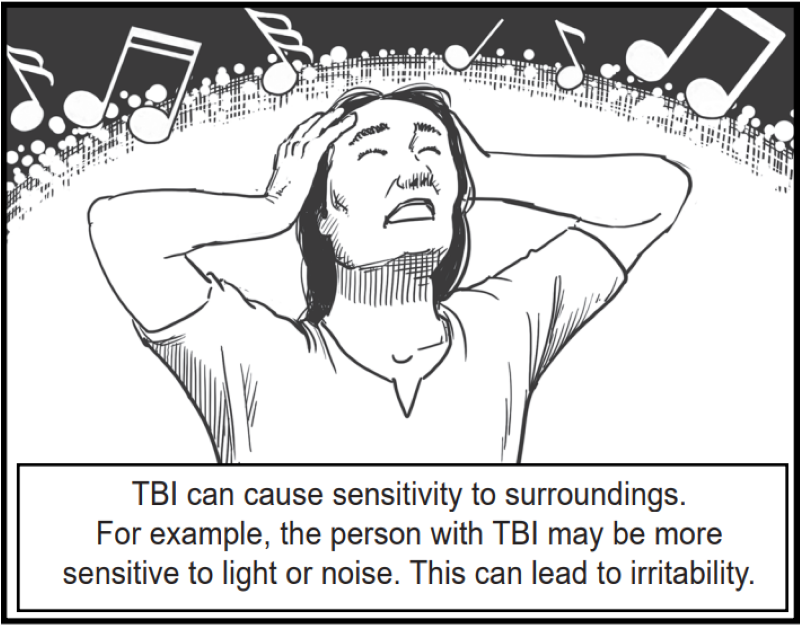
TBI can cause sensitivity to surroundings. For example, the person with TBI may be more sensitive to light or noise. This can lead to irritability.
Dakota also tells Winnie that anger, irritability, and aggression after a TBI can have a negative effect on life. It can affect:

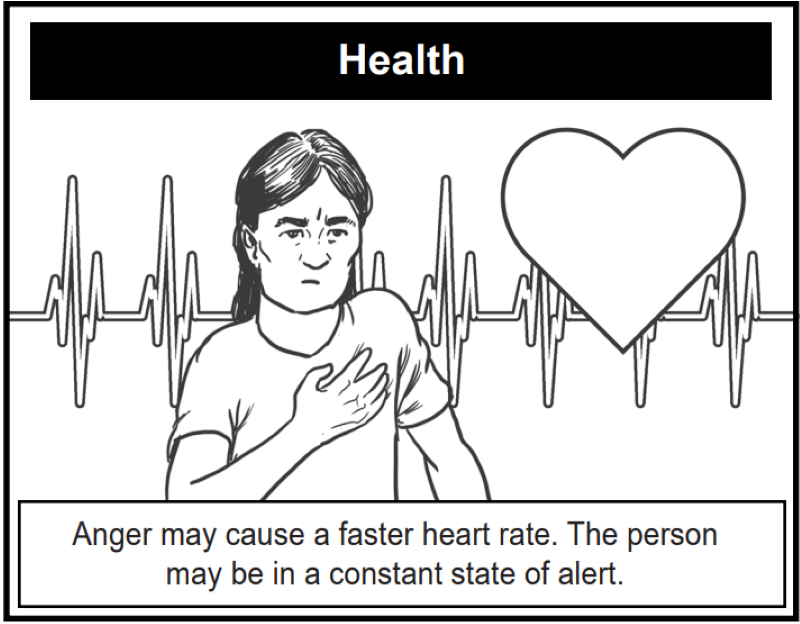
Anger may cause a faster heart rate. The person may be in a constant state of alert.

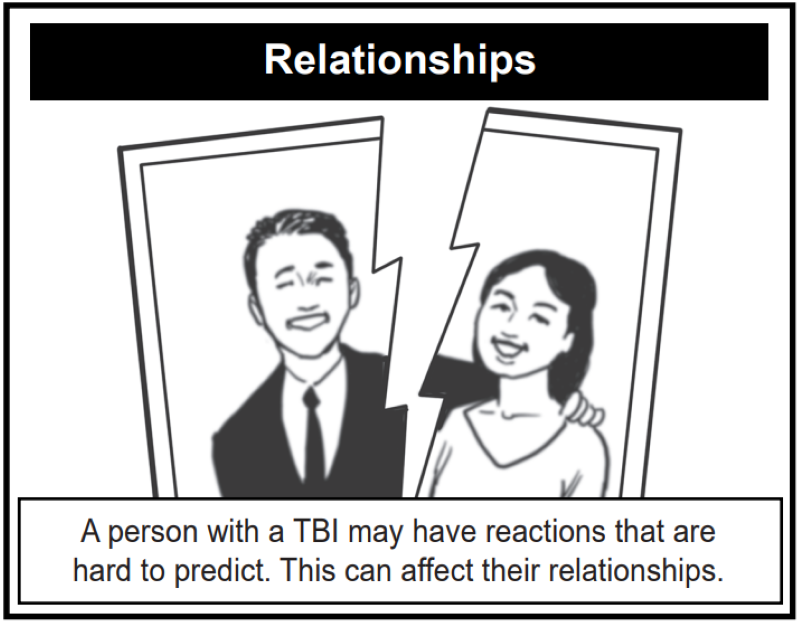
A person with a TBI may have reactions that are hard to predict. This can affect their relationships.

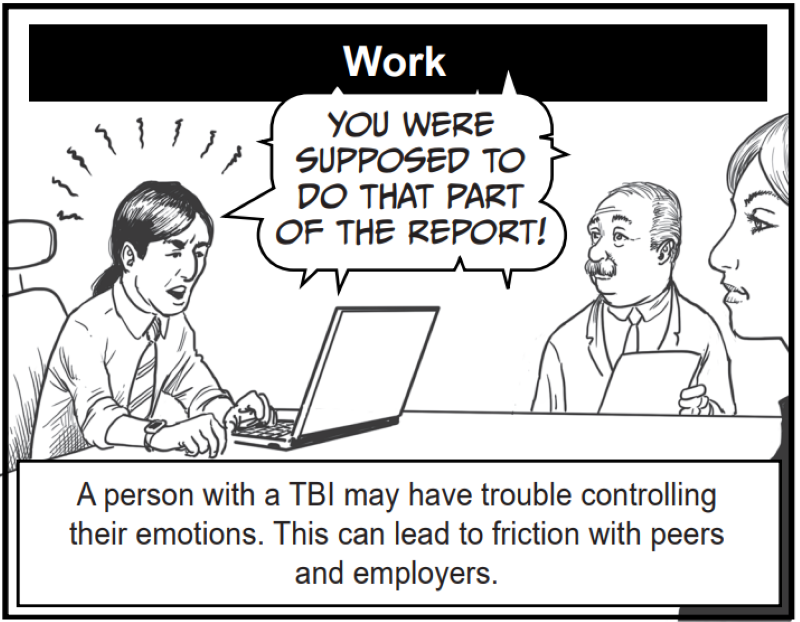
A person with a TBI may have trouble controlling their emotions. This can lead to friction with peers and employers.

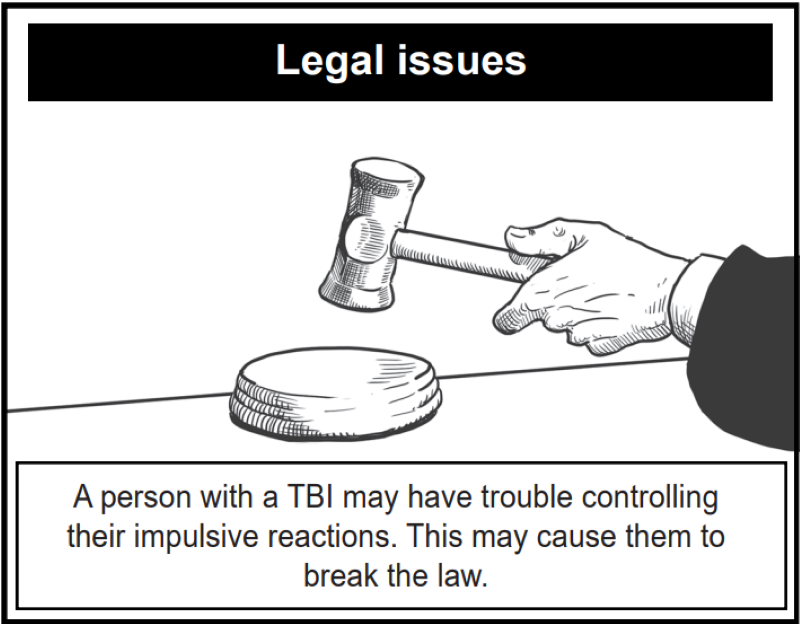
A person with a TBI may have trouble controlling their impulsive reactions. This may cause them to break the law.

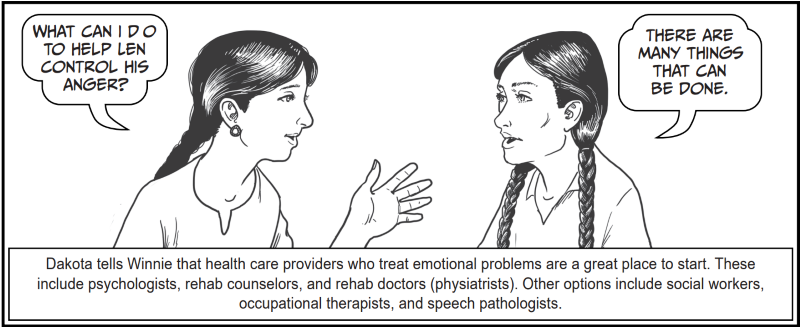
Dakota tells Winnie that health care providers who treat emotional problems are a great place to start. These include psychologists, rehab counselors, and rehab doctors (physiatrists). Other options include social workers, occupational therapists, and speech pathologists.

To help reduce anger and aggression in people with TBI, these providers may offer.

Doctors can use medicines to treat irritability, anger, and aggression.

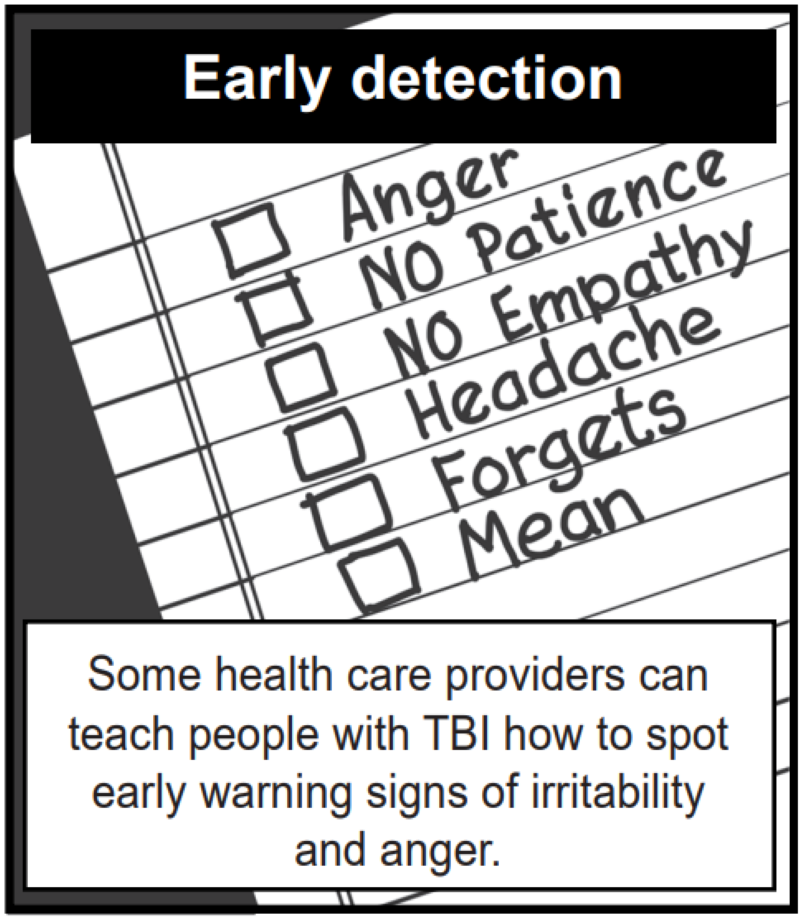
Some health care providers can teach people with TBI how to spot early warning signs of irritability and anger.

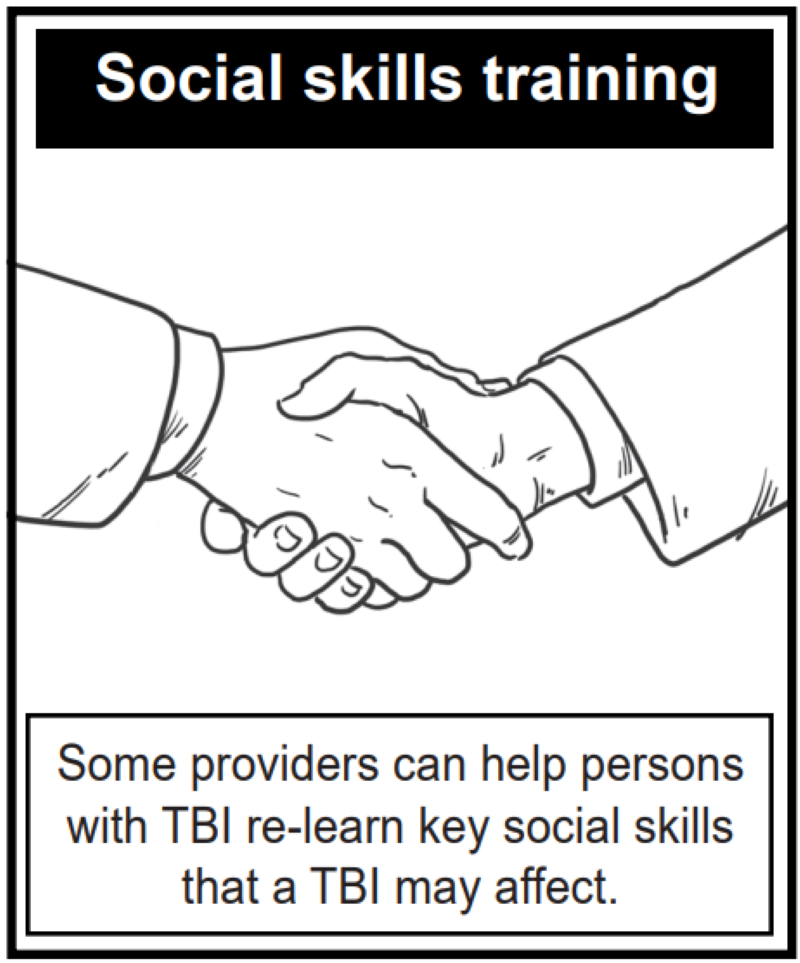
Some providers can help persons with TBI re-learn key social skills that a TBI may affect.

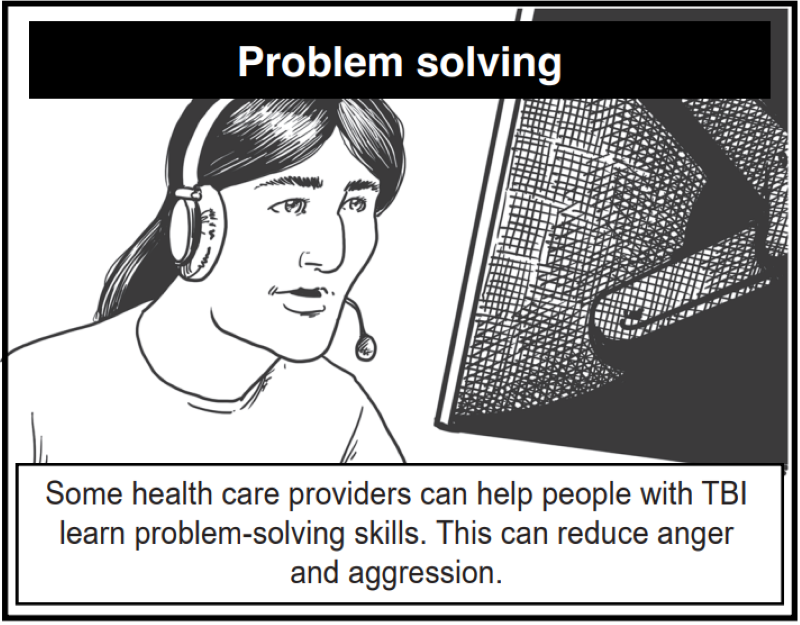
Some health care providers can help people with TBI learn problem-solving skills. This can reduce anger and aggression.

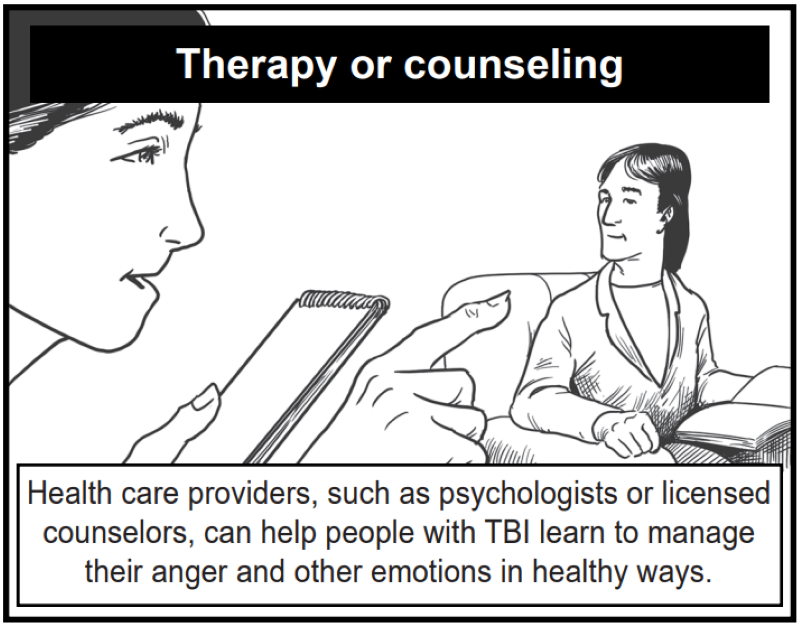
Health care providers, such as psychologists or licensed counselors, can help people with TBI learn to manage their anger and other emotions in healthy ways.

Dakota shares ways for Len to reduce anger and irritability.

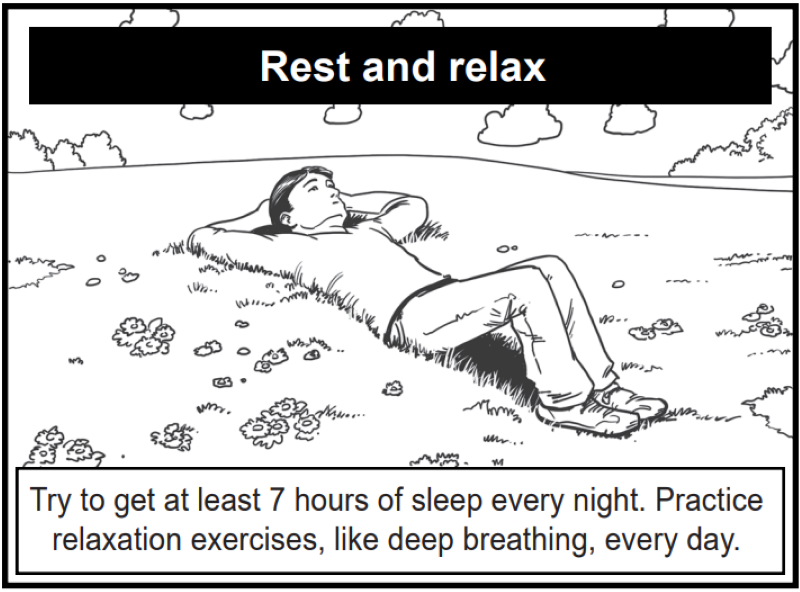
Try to get at least 7 hours of sleep every night. Practice relaxation exercises, like deep breathing, every day.

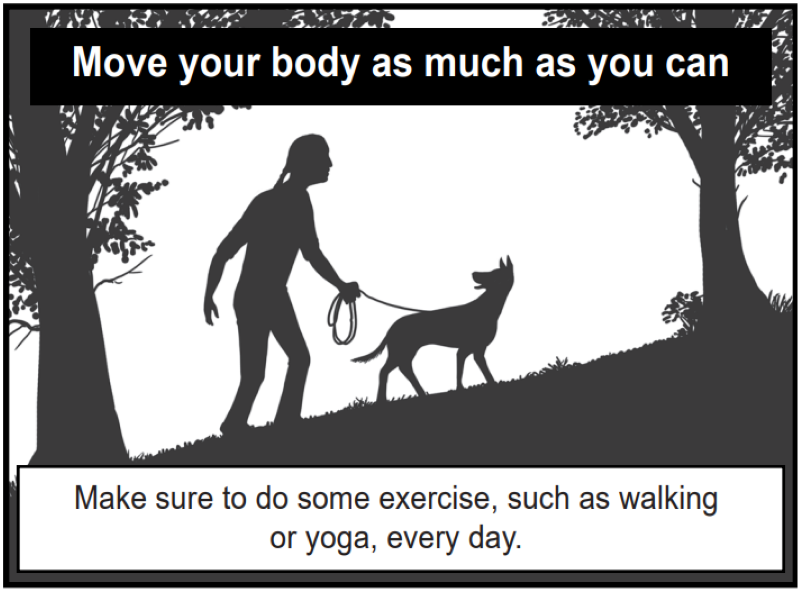
Make sure to do some exercise, such as walking or yoga, every day

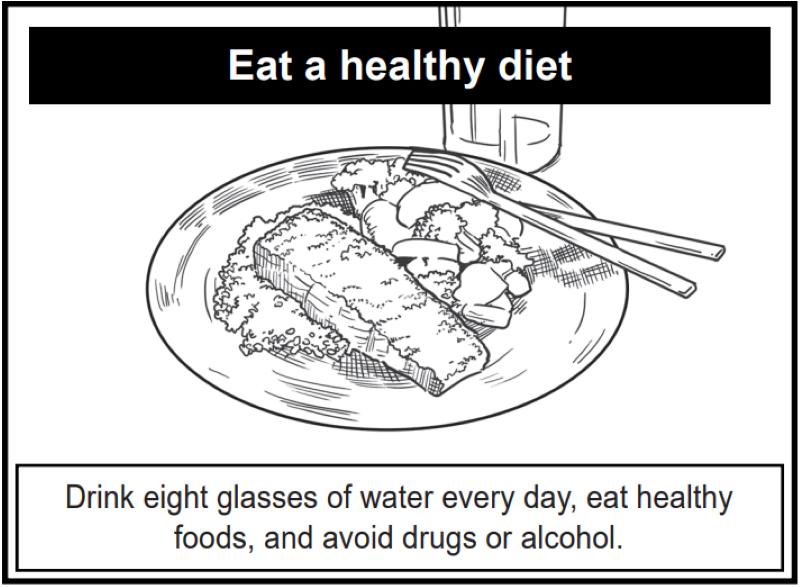
Drink eight glasses of water every day, eat healthy foods, and avoid drugs or alcohol.

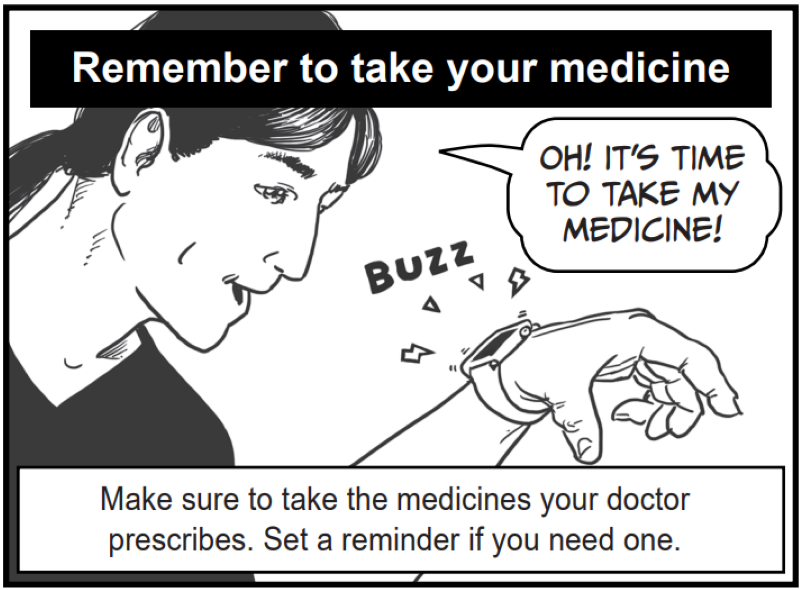
Make sure to take the medicines your doctor prescribes. Set a reminder if you need one.

Dakota tells Winnie that there are things she, her family, and friends can do to help Len reduce his anger and irritability.”

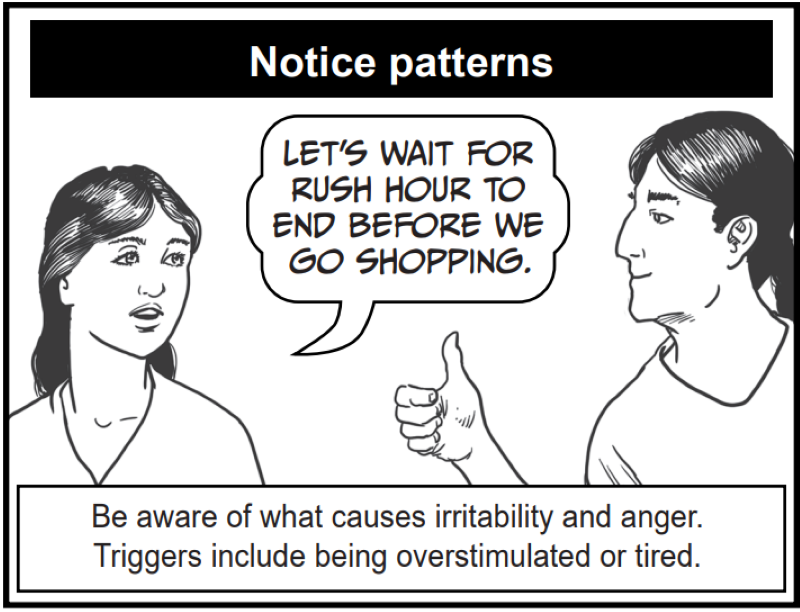
Be aware of what causes irritability and anger. Triggers include being overstimulated or tired.

Try to understand where the person with TBI is coming from and what is causing them to be upset.

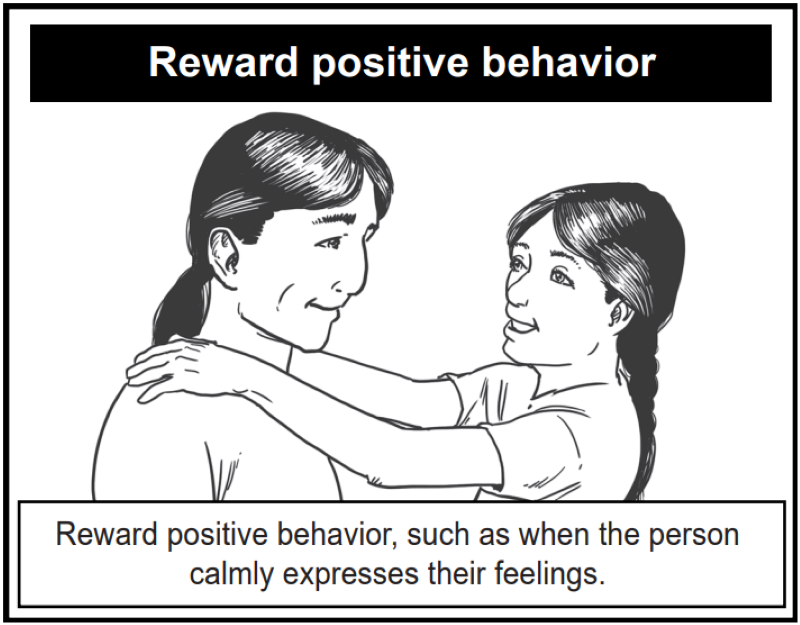
Reward positive behavior, such as when the person calmly expresses their feelings.

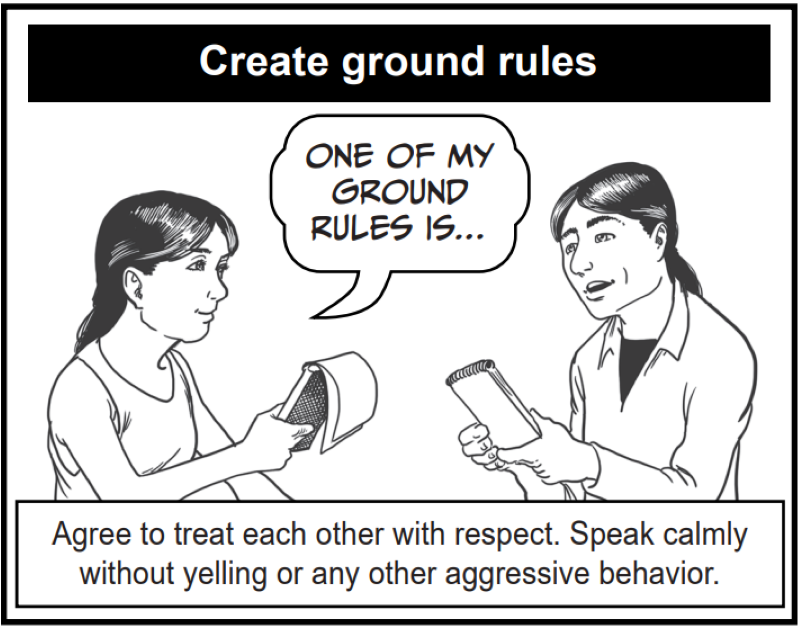
Agree to treat each other with respect. Speak calmly without yelling or any other aggressive behavior.

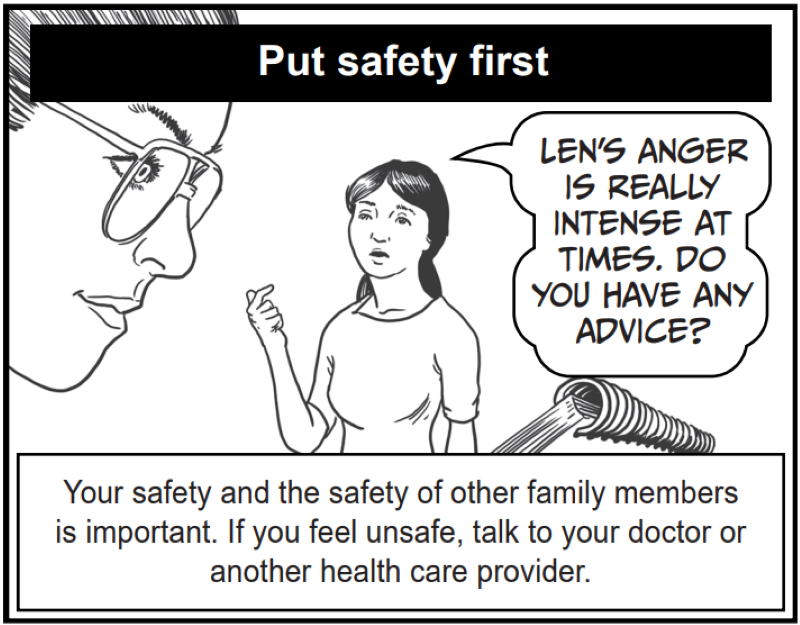
Your safety and the safety of other family members is important. If you feel unsafe, talk to your doctor or another health care provider.

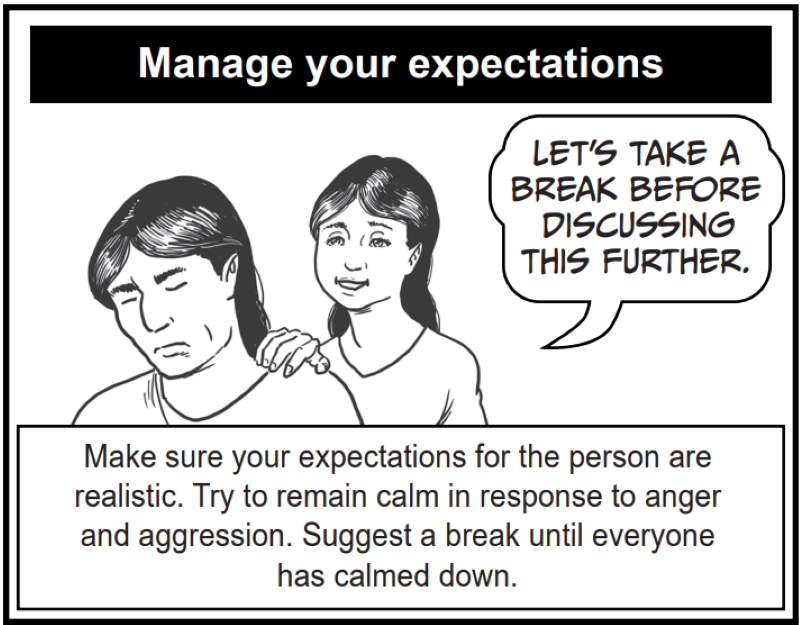
Make sure your expectations for the person are realistic. Try to remain calm in response to anger and aggression. Suggest a break until everyone has calmed down.

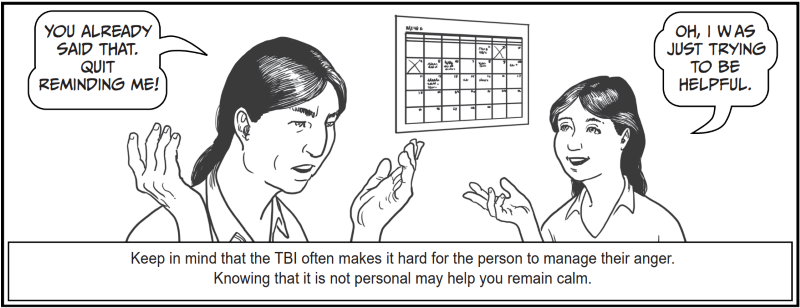
Don’t take things personally

Keep in mind that the TBI often makes it hard for the person to manage their anger. Knowing that it is not personal may help you remain calm.

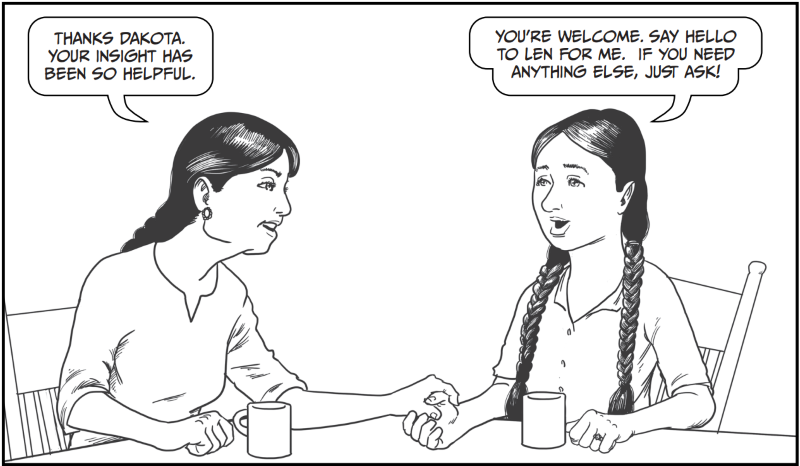
Thanks dakota. Your insight has beEn so helpful.

Source, Disclaimer, and Copyright